Why USSOCOM’s 2013 Integration Decision Still Matters for Today’s Women in Combat Review
On January 6, the Pentagon announced it would review the “effectiveness” of women serving in ground combat roles. Secretary Hegseth asserts that requirements for combat roles must return to the “highest male standard,” postulating that women’s presence alone in combat units degrades readiness. This framing treats the integration of women as an unresolved issue and reinvigorates skepticism regarding women’s effectiveness in combat.
In 2013, the elite United States Special Operations Command (USSOCOM) already deliberately confronted these concerns with evidence, operational experience, and over a decade of implementation data. Reopening another “Women in Service Review” carries serious risks of misdiagnosing the true sources of shortfalls in combat effectiveness. Instead, the Department of Defense (DoD) should focus its efforts on identifying the systemic problems that actually prevent all service members from performing to their full capabilities: institutional barriers, leadership failures, and high rates of sexual harassment and assault.
USSOCOM’s Evidence-Based Decision for Inclusion
In 1994, the DoD implemented a policy excluding women from 15 percent of all positions across the armed forces, including ground combat and special operations forces. Nearly two decades later, in 2013, the Secretary of Defense rescinded this policy, directing the services to open all positions to women, unless exceptions could be justified with data within 2 years. This placed USSOCOM at a decision point: request an exception to policy, or commit to full integration. In 2015, they chose integration deliberately, based on evidence, operational experience, and U.S. values.
General Joseph Votel, serving as the USSOCOM Commander, provided four rationales for declining the opportunity to submit an exception to policy. First, USSOCOM stressed the importance of the foundational SOF truth that “humans are more important than hardware.” Leaders of special operations formations widely accept this truth as a guiding principle. In 2015, USSOCOM leaders argued that excluding women from the opportunity to serve violated this principle. Since the capabilities and mindsets required for special operations are exceedingly rare and present in both sexes, the application pipeline needed to be open to all. Any artificial narrowing of the application pool would limit leaders’ ability to identify and select the most exceptional talents.
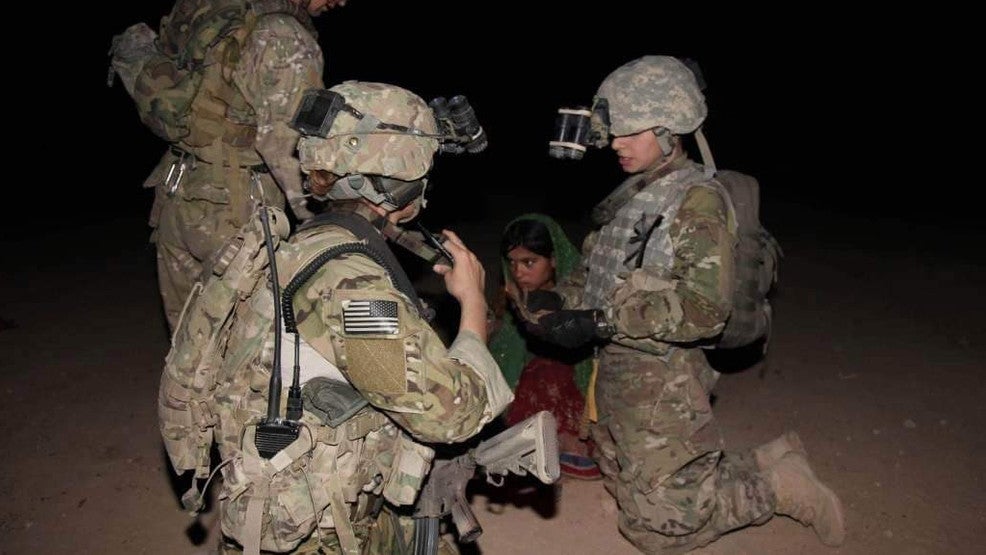
Second, USSOCOM anchored its decision by acknowledging the fact that women had already proven themselves. Women had supported special operations both informally and through cultural support teams (CST) long before official integration. Special operations forces followed a precedent established by conventional forces. As early as 2005, women were integrated in Marine Corps and the Army’s infantry combat operations through the Lioness program, which was later formalized in 2009 as the infantry’s Female Engagement Teams (FET). Women provided ground combat units placement, access, and intelligence previously off-limits to male-only units. Women gained entry into homes and interviewed populations previously neglected, allowing for more nuanced and accurate intelligence. Special operations forces observed these capabilities directly through their own CST program, which first deployed alongside special operations forces in Afghanistan beginning in 2011. Special operations commanders witnessed firsthand what women brought to combat, which directly informed their decision in support of integration.
Third, USSOCOM cited American values. While maintaining training standards based purely on occupational requirements, the command affirmed that integration “serves in a society that is built upon the belief that every American should be afforded the opportunity to rise to their full potential.” Choosing integration would bring the elite warfighters into lockstep with the values for which they would fight and sacrifice.
Finally, the data was unambiguous. USSOCOM determined that decades of rigorous analysis commissioned by the DoD and USSOCOM, as well as their own surveys of senior leaders, provided no compelling analytical justification for exclusion. A decade later, the evidence validates this approach.
The Research of the Past Validates the Implementation Data of Today
USSOCOM’s conclusion was well-founded. As early as 1997, a RAND Corporation study found that gender integration had no meaningful impact on readiness, cohesion, or morale. Rather than rely solely on this earlier work, before refusing the exception to policy, USSOCOM commissioned its own RAND research report in 2013 that included surveys, focus groups, and a comprehensive analysis of how integration would affect tactical formations. The conclusion remained largely the same: there was no compelling reason to exclude qualified women as long as leadership, standards, and training were applied the same to all, regardless of gender or other factors.
A decade of implementation has validated this policy across performance metrics measuring readiness, cohesion, and morale. Between 2019 and 2023, the Army tracked unit readiness metrics, revealing no significant degradation in performance. These metrics included the most operationally relevant to combat readiness: individual soldiers’ weapon qualifications, expert badges, crew training on weapons and other platforms, and platoons’ combat training center performances. Furthermore, the data didn’t substantiate any degradation to morale or cohesion among integrated combat units and the most elite special operations forces.
A 2021 qualitative study found that men who worked directly with women in their unit were significantly more likely to support gender integration and less likely to worry about the effects on unit cohesion and performance, suggesting that opposition to integration may be driven more by preconception and gender bias than by actual operational experience. In 2023, the U.S. Army Special Operations Command (USASOC) reported no decline in morale from integration. Even more telling, a majority of both men and women across special operations said they would support their daughters joining Army special operations units.
The data reflects what those of us who have served alongside women in special operations already knew. Having deployed with special operations forces in Afghanistan and having served over two years with the 160th Special Operations Aviation Regiment, I saw women consistently exceed the standards of our most demanding units. I’ve seen women conduct prison raids in Afghanistan, complete daring hostage rescue operations, and infiltrate restricted airspace. My twin sister serves in the Navy’s elite Explosives Ordnance Disposal (EOD) community, where women comprise only 2% of personnel despite integration in 1980, a figure that reflects both the persistent barriers and the exceptional selectivity of women who reach the most elite forces. Women in combat and special operations must meet the same physical standards as men: the same run times, ruck times, swim tests, and fitness assessments. They are eliminating explosive threats alongside their male counterparts, meeting identical standards in the most unforgiving environments the military has to offer, where standards make the difference between life and death.
Historical Context: An Acknowledgment, Not an Innovation
The 2013 decision didn’t create something new. It acknowledged something true. Women have served in combat, both formally and informally, since the Army’s founding. Deborah Sampson fought on the front lines during the Revolutionary War. 1LT Ashley White-Stumpf was killed in action in 2011 while serving on a joint special operations task force in Kandahar. The historical record is not a collection of exceptions. It is a lineage of trailblazers who paved the way for formal recognition that policy eventually caught up to deliver.
Today, thousands of women are serving in positions previously not opened to them. Over 150 women have graduated from Army Ranger School, over 5,000 women serve in combat positions across the Marine Corps and Army, and over 250 women are operators within the military’s most elite special operations forces. Madeline Miller, a field artillery officer, earned a Bronze Star for Valor while deployed to Syria in 2021, less than a decade after formal integration. Most recently, a woman B-2 bomber pilot participated in the June 2025 nuclear site strike in Iran, despite leaders stepping to the podium afterward to praise “our boys in those bombers.”
What’s at Stake: The Case for Reframing this Review
The Pentagon press secretary stated that the review intends to examine “the effectiveness of having women in ground combat roles to ensure standards are met, and the United States maintains the most lethal military.” That stated intent reflects a positionality that treats gender as a performance metric rather than examining whether standards themselves are commensurate with occupational requirements. This framing conflates two fundamental yet distinct questions: whether military standards are correctly calibrated to occupational requirements, and whether women can meet those standards. The first is a legitimate and worthwhile inquiry. The second has already been answered as demonstrated through history, research, implementation data, and over a decade of operational experience.
If the true intent is to focus on the latter, the review risks not only the careers of thousands of qualified service members, but the U.S. ability to field the most capable force possible. The current military practice is to fill special operations and combat positions with the best people for the mission. Any policy that artificially limits that talent pool makes the U.S. military weaker, not stronger. Furthermore, the military risks misdiagnosing the real structural barriers that have already been identified as preventing all service members, men and women, from performing to their full capabilities.
A review of unit performance, based on standards that achieve operational priorities, is entirely within the scope of the DoD to evaluate whether standards across combat positions and special operations remain directly linked to operational requirements. That evaluation should happen regularly, and it should be rigorous. Standards should be recalibrated over time, evolving with mission requirements, to include physical fitness standards to pilot mission qualification thresholds. However, a transparent, apolitical, evidence-based review would ground itself in where the real problems lie.
Previous surveys identify that training, operational tempo, leadership, and materiel had the greatest impacts on readiness, morale, and cohesion. Furthermore, the 2023 USASOC report found that organizational culture, ill-fitting equipment, and sexual harassment and assault have created barriers that disproportionately impact the very performance standards the military seeks to protect. Addressing these barriers requires deliberate institutional attention, which disappears when the focus shifts to questioning whether women belong rather than examining why capable service members are not being fully supported by the institutions they serve.
The Most Capable Force
In 2015, the military’s most elite combat forces stood behind the Secretary of Defense to “fully support opening all special operations specialties and units to female service members.” They based that decision on evidence, operational experience, and foundational U.S. values. USSOCOM defended integration with evidence over a decade ago. They, along with the rest of the military, should be prepared to defend it with evidence now.
My sister and I have served in the most elite organizations the military offers. We have seen firsthand what a performance-based, merit-driven force looks like and what it produces. That force deserves to be improved through honest reviews. Reviews that ensure standards are tied to gender-neutral occupational requirements, that identify and dismantle the institutional barriers that disproportionately exclude capable service members for reasons beyond those requirements, and that recognize what the data has consistently shown: that those barriers, not the women who clear them, are what diminish lethality and effectiveness.
I hope my daughter is not only afforded those same opportunities, but that if she so chooses, she enters an even better force than the one I was fortunate enough to serve in. Where inclusion was not a fleeting moment of evidence trumping gender-based exclusion, but the beginning of a permanent institutional commitment to fielding the most capable force possible.
Views expressed are the author’s own and do not represent the views of GSSR, Georgetown University, or any other entity. Image Credit: Ashley White-Stumpf | Gilder Leherman Institute of American History