The United States’ Risky Gamble on Balochistan’s Critical Minerals
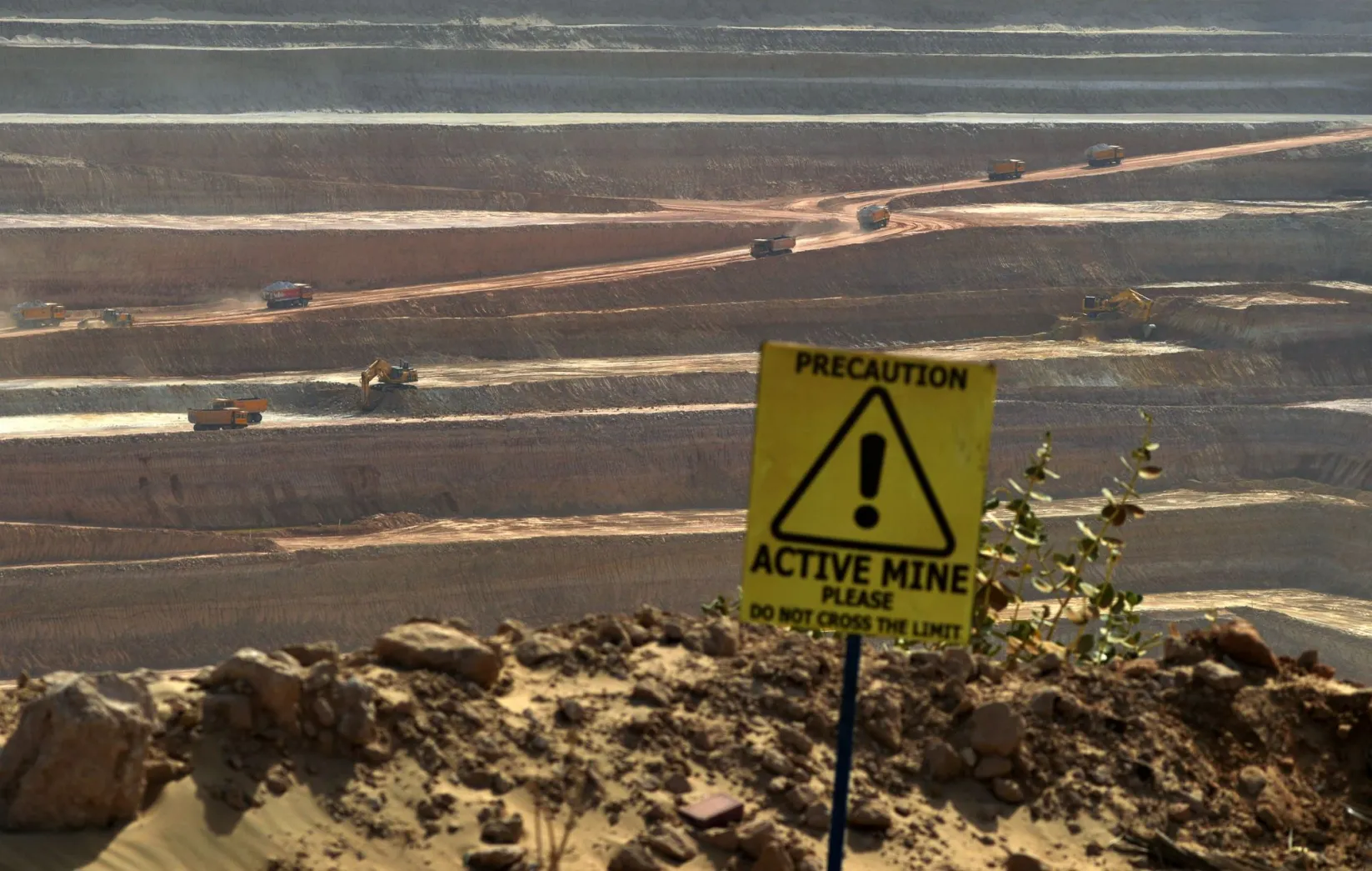
The United States and the People’s Republic of China’s (PRC) global competition over critical mineral supply chains has arrived in a new destination: Balochistan, Pakistan. The U.S. and Pakistan struck early-phase agreements over these minerals as the PRC continues to utilize its raw materials dominance in the 2025 trade war. At first glance, this partnership looks like a strategic win for Washington–a timely move to diversify supply and push back against Beijing. However, it would be a mistake for the U.S. to assume an automatic victory. In reality, the agreement is a high-stakes, multi-year gamble with shaky odds. Those expecting an easy path in the deserts of Pakistan should look at the last player who attended this particular roulette table: the PRC.
The Great Mineral Game
Like other recent U.S. critical mineral announcements, discussions over a potential U.S.-Pakistan mining collaboration stem from a turbulent year for U.S.-PRC trade relations, during which the PRC expanded restrictions on various critical minerals in April and October. In late October, the Trump–Xi talks appeared to ease these restrictions, though the longevity of this truce remains uncertain and does not lessen the threat to U.S. national security. The PRC’s rare earth restrictions, particularly of neodymium and praseodymium, alone have serious implications for the U.S.’ defense posture, given their use in platforms such as fighter jets and submarines. Presently, the PRC has a near monopoly not only on the extraction of many of these rare earth elements, but also in their refinement process. the PRC also has a firm grip on other critical minerals such as tungsten, gallium, and germanium. The U.S. response over the last half-decade has been to find and finance new extraction and refinement sources. Notably, the Pentagon has announced a target date of January 1st, 2027 for phasing out PRC-origin rare-earth magnets and certain other materials from U.S. defense systems. Since then, the announcements of U.S. critical mineral initiatives have been multiplying across the globe, ranging from Kazakhstan and Saudi Arabia to Greenland, as well as a long list of prospective domestic projects.
Washington’s gaze turned to Pakistan in April, with a Congressional and State Department delegation visit to Islamabad for a minerals investment forum. In May, following Trump’s “liberation day” and the PRC’s subsequent restrictions, Pakistan offered U.S. firms concessions on mining investments during tariff talks. In September, the firm U.S. Strategic Metals (USSM) signed a $500 million investment framework with Pakistan’s Frontier Works Organization (FWO) to develop mining and refining operations. The first sample consignment of readily available concentrates, including antimony, copper, and rare earth minerals, was sent from Pakistan to USSM’s Missouri facilities in October. Simultaneously, Pakistani leadership met with President Trump in September to present him with mineral samples. In November, the U.S. firm Nova Minerals also expressed its interest in entering Pakistan’s mineral game.
With the recent Trump-Xi APEC meeting’s progress on rare earth restrictions, the actual realization of these deals may matter less in the short term than the efficacy of their optics for the negotiation process. The appearance of the U.S. eroding the PRC’s prized bargaining chip, while presenting a narrative about a weakening of the PRC-Pakistan “all-weather” friendship, aligns with the image-driven style of the Trump administration. PRC analysts and officials have downplayed this development, stating they received assurances that Islamabad “would never undermine” Beijing’s interests and that they retain an “ironclad friendship.”
Concrete details about this potential critical minerals play in Pakistan remain opaque. While Pakistan’s government claims an estimated $6-8 trillion worth of untapped mineral reserves, analysts remain cautious or skeptical about these numbers. Pakistan may hold up to half a million tons of rare earth oxides, though most of its terrain remains underexplored and uncertified. U.S. Strategic Metals has limited overseas experience and previously focused on North American battery metals. Key information, such as concentrate purity, expected annual tonnage exports, a clear timeline towards a binding contract, or even an equity breakdown, is largely unknown at this time.
It remains unclear if recent meetings and announcements will materialize into a strategically meaningful reality. While the framework’s Phase 1 focuses on exporting readily available minerals, Phases 2 and 3 of the USSM MOU include developing up to 10 mines and building in-country refineries. Such a project, or even a set of them, is unlikely to singularly solve the U.S.’ larger critical minerals problem but rather would, at best, be one component of a larger piecemeal diversification strategy.
The PRC’s Cautionary Tale
The risks of such a project mirror the PRC’s $60 billion the PRC–Pakistan Economic Corridor (CPEC). The project promised to develop energy and transportation infrastructure, expand Gwadar Port, and construct a proposed energy pipeline to help the PRC bypass the Malacca Strait. Years of obstacles eroded the project’s momentum, including challenging terrain, protests, and attacks by Balochistan separatist forces. Local friction has resulted in the deaths of nearly 100 PRC nationals. The attacks forced the PRC to eventually consider private security to protect workers. Pakistan’s chronic political instability further adds to questions about the longevity of any investment. Despite this turbulence, it is worth noting that the PRC has successfully established multiple mines in Pakistan, including in Balochistan, such as the Saindak Copper-Gold Mine and Duddar Lead-Zinc Mine.
Future U.S. investment in Pakistan will similarly face political instability, poor infrastructure, cross-border violence, and violent separatists, who see foreign investments as Pakistan cementing its claim to Balochistan. If exporters route concentrate through Pasni Port, the proposed U.S. competitor to Gwadar, the transport vehicles would have to traverse 800 dangerous kilometers to reach the coast. Put simply, it is manageable for U.S. companies to invest in mines, but manning these mines with potential U.S. targets is an extreme risk.
A Solution or a Quagmire in the Desert?
How should the U.S. approach such a complicated landscape? Prospectors often rely on data models, AI analysis, and core samples to quantitatively assess if they can project profitability. However, no model can truly quantify the risk of a terrorist attack, a missile strike, or the collapse of a nuclear-armed government. Success in such an environment should aim to simply break even on modest investments, maintain a steady stream of mineral exports, and do so without harming the U.S. image–not expecting to be a fix-all solution to the U.S. supply chain. Project failure would follow the path of CPEC’s attempted pipeline: perpetually stalled, expensive, deadly, and overall damaging to the nation’s reputation. Should U.S. ventures falter, Beijing could use their failure as proof that Western investments are unreliable.
Smaller investments in Pakistani mining operations, rather than large-scale new mines or processing facilities, may be less attractive to the Pakistani government, but are a more realistic assessment of the project’s prospects. U.S. firms seriously considering such a hazardous environment should attempt to minimize risk with stakeholder engagement, including local investments, environmental protections, and a policy of transparency. All accounted for, the resources spent securing such investments in Pakistan may be better spent on discovering and mining these critical mineral ores in safer, more stable geographies. Optics alone don’t supply magnets and missiles– predictable and profitable production does.
The U.S.-Pakistan relationship is expected to evolve amidst this thaw under the Trump administration, and critical minerals may be an avenue for growth. Ultimately, working with Pakistan is but one move in a much larger game the U.S. may play to erode the PRC’s stranglehold on critical raw materials. U.S. federal agencies should continue to identify and realize mining opportunities in the homeland. Simultaneously, the U.S. diplomatic corps should continue to actively identify and pursue new, potentially viable, sources, including those often-overlooked places– such as rare earths in Indonesia’s Bangka and Belitung islands. Just like any gamble, diversification of one’s portfolio is key to minimizing risk.
Views expressed are the author’s own and do not represent the views of GSSR, Georgetown University, or any other entity. Image Credit: Los Angeles Daily News