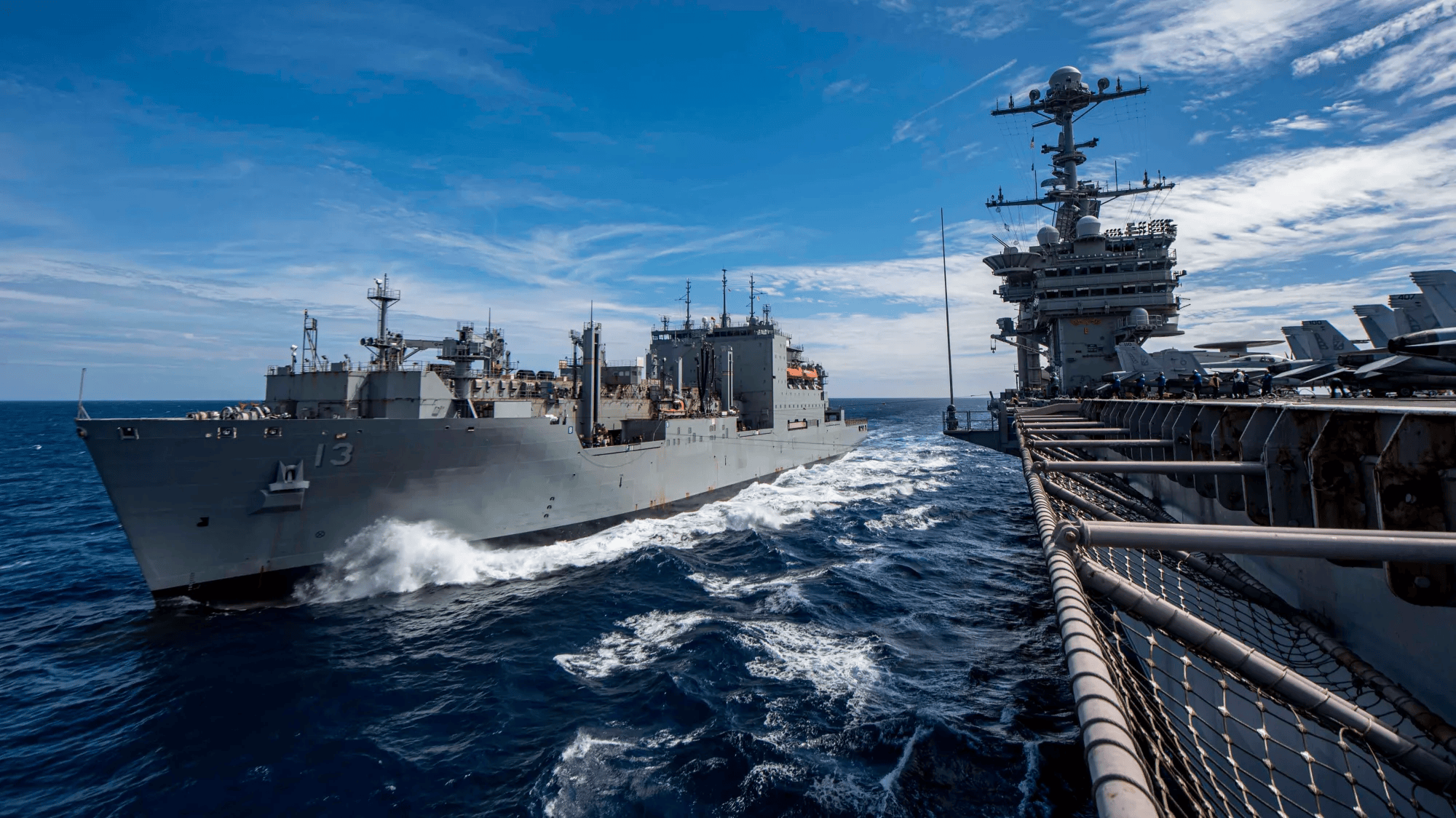
The Fleet Behind the Fleet: Fixing the Atrophied U.S. Maritime Logistics System
Costly acquisition failures and delayed shipbuilding programs have steadily eroded the advantages the U.S. Navy has long enjoyed since the end of the Cold War. These trends are coinciding with the expansion and modernization of the People’s Liberation Army Navy (PLAN), the U.S. Navy’s foremost competitor in the Indo-Pacific. The cumulative effect is an erosion of deterrence against the People’s Republic of China (PRC) in the Indo-Pacific. While policymakers are rightfully concerned about the future of the U.S. Navy’s surface combatant mix, deterrence demands the ability to not only field firepower, but also to sustain a resilient and expansive logistical system to support and replenish it for as long as necessary to win the fight.
However, chronic underinvestment and shifting policies have left the U.S. maritime logistics system atrophied and ill-equipped to meet the geographic and doctrinal challenges of an Indo-Pacific conflict. To secure deterrence, the United States should recapitalize its maritime logistics by dispersing and hardening pre-positioning stocks, integrating autonomous vessels, and expanding the U.S. Merchant Marine and surge sealift fleet.
Getting Our Bearings
The maritime logistics fleet consists of government and commercial ships that operate together as part of the “National Fleet” to meet the supply and transportation needs of the military. The Department of Defense (DoD) and the Department of Transportation (DOT) jointly manage the fleet, specifically through the Navy’s Military Sealift Command (MSC) and DOT’s Maritime Administration (MARAD).
The MSC operates more than 140 U.S. government-owned or chartered ships crewed by civilian mariners, providing logistical support across the Joint Force. Analogous to combatant commands, the MSC organizes itself into five Area Commands: Atlantic, based in Norfolk, Virginia; Pacific in San Diego, California; Europe and Africa in Naples, Italy; Central in Manama, Bahrain; and Far East in Singapore. Its missions include providing general fleet support via rescue and salvage, delivering matériel to deployed carrier strike groups, operating specialized mission vessels, and pre-positioning ships with combat equipment and sustainment supplies for rapid crisis response.
MARAD’s mission is to steward the U.S. Merchant Marine (USMM) and broader maritime industry to support the maritime transportation architecture required to meet economic and defense needs. MARAD is responsible for operating and maintaining the Ready Reserve Fleet (RRF), a subset of 47 Roll-on/Roll-off ships kept in a high readiness state to provide surge sealift capacity for the Joint Force during wartime emergencies.
From Shorelines to the Deep Blue
The maritime logistics system has suffered from the same issues that have plagued the broader Navy fleet since the end of the Cold War: underinvestment and shifting policy priorities, trading wartime resilience for peacetime efficiency. Following withdrawal from Iraq and Afghanistan and the corresponding pivot to great power competition with the PRC in the Indo-Pacific, the Joint Force faces the prospect of fighting a new type of conflict with accompanying assumptions and challenges that the existing maritime logistics system is not adequately configured to meet.
In the lead-up to Operation Desert Storm (ODS) in 1991, U.S. forces benefited from a logistical support network stationed in Saudi Arabia and later Kuwait, with a proximity to combat theaters and the luxury of time and relative safety to mass forces. The United States relied on an “Iron Mountain” logistics approach, building up large, static stockpiles of material closer to the front line. The ability of U.S. command to leverage existing physical infrastructure and integrate within existing logistics networks of host nations enabled the system while avoiding the effort and friction of establishing systems from scratch.
During Operation Enduring Freedom, supplies were delivered via truck convoys or airlift, owing to Afghanistan’s landlocked and mountainous geography. Despite early attacks, supply staging hubs in neighboring states were relatively safe as the Taliban possessed only limited long-range interdiction capabilities. Furthermore, the proximity of European allies meant that NATO forces were able to diversify supply routes through the creation of the Northern Distribution Network (NDN) following a series of Taliban strikes in Pakistan. The NDN consisted of a host of new supply routes from Europe through Russia or across the Caucasus, primarily through Uzbekistan and into Afghanistan. Consequently, supply convoys were less vulnerable to Taliban attacks and allied logistics were provided a degree of redundancy (see Figure 1).
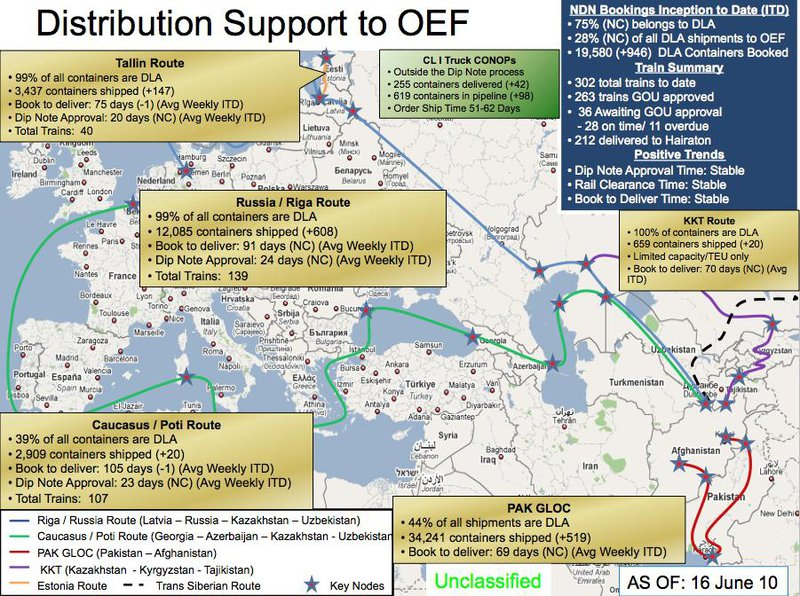
Figure 1. Logistics Routes for Operation Enduring Freedom (Source: Defense Logistics Agency)
It would be an oversimplification to state that U.S. maritime logistics or the broader logistics system had an easier job in the Middle East and Afghanistan than in the Indo-Pacific. Corruption, chronic delivery delays, and high costs were ever-present issues. The Taliban were able to interrupt supply convoys in Afghanistan-proper using a combination of improvised explosive devices and ambush tactics. At a broader level, the nature of counter-insurgency operations and the wider operating environment presented different challenges and pressures. The resulting adaptation yielded a tailored logistics system that must be reformed and equipped to meet the demands of deterring and fighting high-intensity, conventional conflict with a peer adversary.
Rough Waters in the Indo-Pacific
A future conflict with the PRC would be antithetical to the wars the United States has fought in the Middle East and Afghanistan. It would be an air-naval conflict against a peer adversary with a clear intent and ability to target rear-echelon logistics units. The PLAN is a numerically superior and capable adversary. Backed by a world-class shipbuilding industry, it has grown and modernized significantly in the past two decades. Most PLAN ships are modern, multi-role vessels equipped with advanced sensors and long-range missiles. In comparison, the U.S. Navy has struggled to develop and acquire new ships to grow the fleet (Figure 2).
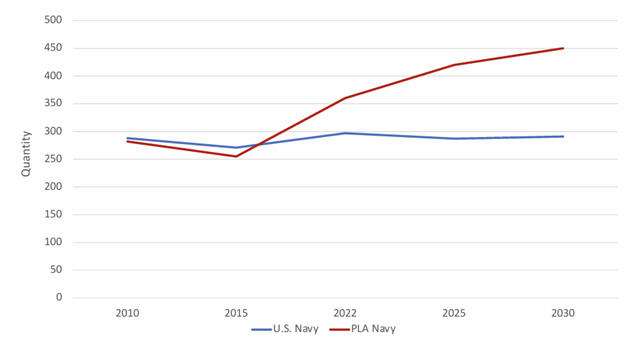
Figure 2. Total Battle Force Ships of U.S. Navy and PLAN (Source: Center for Budgetary and Strategic Analysis)
Furthermore, in the event of a Taiwan crisis, an arsenal of cruise and ballistic missiles with the range to strike far beyond the First Island Chain would augment the PLAN’s strike capabilities.
The PLA’s observations of past U.S. military logistics performance have fundamentally shaped its military doctrine emphasizing counter-logistics operations. Two noteworthy examples are U.S. operations during the Pacific campaigns in World War II and the Persian Gulf Wars. Chinese military literature reveals that the PLA has internalized a key lesson from the Pacific Theater: Japan’s failure to interdict vulnerable U.S. supply lines and depots enabled U.S. industrial and material advantages to compound into significant tactical and operational advantages. PLA analysts also observed the United States’ ability to mass considerable assets and firepower if given the luxury of time and safety in preparation for operations in Iraq.
In addition to the prospect of higher interdiction and attrition rates, a conflict with the PRC would also consume more manpower and material than the peacetime rate for which the system is currently optimized. The Center for Strategic and Budgetary Assessment (CBSA) estimated that in the event of a high-tempo conflict with the PRC, the Navy would consume more than 4.5 million barrels of naval and aviation fuel, 10,800 missiles, and 10,000 tons of other munitions and expendables per month. This is in addition to supplies for personnel, sustainment, and repair for the Navy and other branches of the Joint Force.
Shifting Winds and Wider Nets
The U.S. military has rightfully identified the challenges posed by the PLA’s anti-access/area-denial capabilities, with component military services revising their Operating Concepts accordingly. Under Distributed Maritime Operations (DMO), the Navy intends to depart from concentrated formations centered around carrier strike groups to dispersing ships across the theater. For the Air Force, Agile Combat Employment shifts operations from centralized air bases to a network of smaller locations. Finally, the Marines envision organizing into smaller, mobile, low-signature, persistent expeditionary units that are intentionally deployed in austere, forward locations within contested areas.
Yet these revisions rely on a degree of geographic dispersion and agility that the current logistics system is ill-equipped to meet. Operating and maneuvering over a wider area means longer transit times, more ships, and more mechanical wear and tear. A round-trip between San Diego and the Western Pacific covers 11,400 nautical miles, taking approximately 24 days compared to 400 nautical miles and less than a day during the First Gulf War. This is before factoring time, expense, and complexity of Last-Mile delivery.
Shrinking Crews and Rusting Hulls
In addition to the systemic issues confronting the maritime logistics system from the PRC or future doctrinal changes, there are a set of specific issues confronting key components of the logistics system. Addressing these is integral to ensure the system has the personnel and expertise needed to adapt to the broader systemic challenges.
The U.S. Merchant Marine (USMM) is globally uncompetitive due to high labor and operational costs, stringent regulations, and exacting standards. As a result, the size of the USMM fleet has shrunk, reducing its value as an auxiliary force to supplement the U.S. Navy during wartime contingencies. Specifically, the fleet has decreased by nearly 70% between 1991 and 2025 from 619 to 188 ships. The trend has resulted in the USMM now comprising less than half a percent of the global merchant marine fleet, down from a high of nearly 17 percent in 1960.
As the Military Sealift Command relies on civilian mariners to crew government and commercial ships, the shrinking USMM has led to a labor shortage. In 2024, the U.S. military faced a deficit of over 1,800 mariners needed to sustain both the commercial and activated military surge fleets during sustained operations. This shortfall is further exacerbated by the reality that not all mariners will volunteer for duty in dangerous, contested environments. Over the longer term, recruitment and retention remain challenging, as private-sector opportunities generally offer higher pay, better working conditions, and more attractive benefits.
Finally, the Ready Reserve Fleet (RRF) faces challenges from aging vessels, resulting in higher maintenance costs and more frequent mechanical failures. In a 2022 congressional testimony, the commander of U.S. Transportation Command (USTRANSCOM)—which contains MARAD—stated that roughly 70 percent of RRF ships will approach the end of their service life by 2032. Since 2018, the U.S. Navy, MARAD, and USTRANSCOM have attempted to recapitalize the fleet through a multi-faceted approach combining service life extensions, purchasing foreign vessels, and constructing new ones.
In a report evaluating the recapitalization efforts up to July 2025, the Department of Defense Inspector General concluded that the efforts were unsuccessful. Rising costs and lackluster readiness improvements meant only a handful of ships completed service life extensions. Legislative constraints restricted MARAD and USTRANSCOM’s ability to purchase foreign and domestically produced vessels, leaving a substantial supply gap. Moreover, a reprioritization of funding meant the Navy did not begin the construction of any ships.
Righting the Ship
The U.S. maritime logistics system faces both internal and external challenges that policymakers should work to mitigate or address to preserve a critical component of deterrence against the PRC or any potential adversary. Three high-priority recommendations can address these structural defects by combining existing actions, accelerating ongoing development efforts, and resolving fiscal and legislative obstacles.
- Shorten supply lines through pre-positioning stocks at a larger number of forward bases, prioritizing low-signature and a combination of active and passive defenses. Pre-positioning translates to shorter transit times, greater responsiveness to changing demand, and less wear-and-tear on ships. These benefits mean maintaining sizeable, resilient pre-positioned stocks will remain critical to supporting high operational tempo, especially during the critical opening period of hostilities. As adversaries will inevitably target pre-positioned stocks in an opening salvo, planners should prioritize passive and active defenses, ranging from hardened bunkers, camouflage, and missile defense systems. Dispersing supplies over a larger number of hubs will also reduce the impact of a loss of some bases while forcing adversaries to commit more munitions across a wider area. Given resource limitations, logistics and operational planners need to strike a balance between dispersal and concentration as well as the degree to which to harden facilities.
- Integrate autonomous or semi-autonomous unmanned surface vessels (USVs). The Navy can augment existing logistics-focused projects as well as its growing interest in autonomous, offensive-oriented vessels with autonomous, unmanned, or minimally manned logistics vessels. Logistics USVs will provide a cost-effective and attritable option, which will be especially beneficial for Last Mile delivery. There are already efforts underway to develop the Modular Attack Surface Craft (MASC), autonomous ships that can fit modular payloads of sensors or containerized weapons. MASC can be a useful starting point for future autonomous logistics vessels and, in the medium-term, serve as escort ships for conventional logistics vessels. These surface vessels would be smaller than existing tankers so are best suited for supplying smaller units or ships. As these efforts proceed, the Navy should consider the effects of the proliferation and growing role of USVs on escalation dynamics. There will also be the need to consider how to adapt the logistics system supporting USVs themselves.
- Explore purchasing and reflagging foreign vessels to expand USMM. While integrating USVs will relieve personnel pressures in the medium-term, the Navy still needs more mariners to crew large supply vessels and maintain surge sealift readiness. Despite concerted efforts to invest in the U.S. Merchant Marine Academy to build new National Security Multi-mission training vessels and implement the Maritime Security program to sustain employment levels, a shortage persists. The fundamental underlying issue is the shrinking size of the U.S. Merchant Marine fleet, reducing employment opportunities and the ability to sustain a civilian mariner labor pool. Given the enduring constraints of the U.S. shipbuilding industry and the long lead times required for any substantial changes, Congress should explore easing restrictions and expanding programs to purchase foreign ships and reflag them as U.S.-owned. This would be a more immediate solution and generate jobs while enhancing readiness and security.
At its base, U.S. power projection does not begin with the strike group; it begins with the supply line. For potential allies and adversaries alike, the resilience of the maritime logistics network is a critical and visible sign of our endurance and willingness to fight and win a protracted conflict. Ultimately, constructing and fielding a larger, affordable, and resilient logistics architecture is a strategic imperative as important to frontline deterrence as any warship.
Views expressed are the author’s own and do not represent the views of GSSR, Georgetown University, or any other entity. Image Credit: WAVY News Stream