The Climate Cost of the Russo-Ukraine War and the Case for Russian Reparations
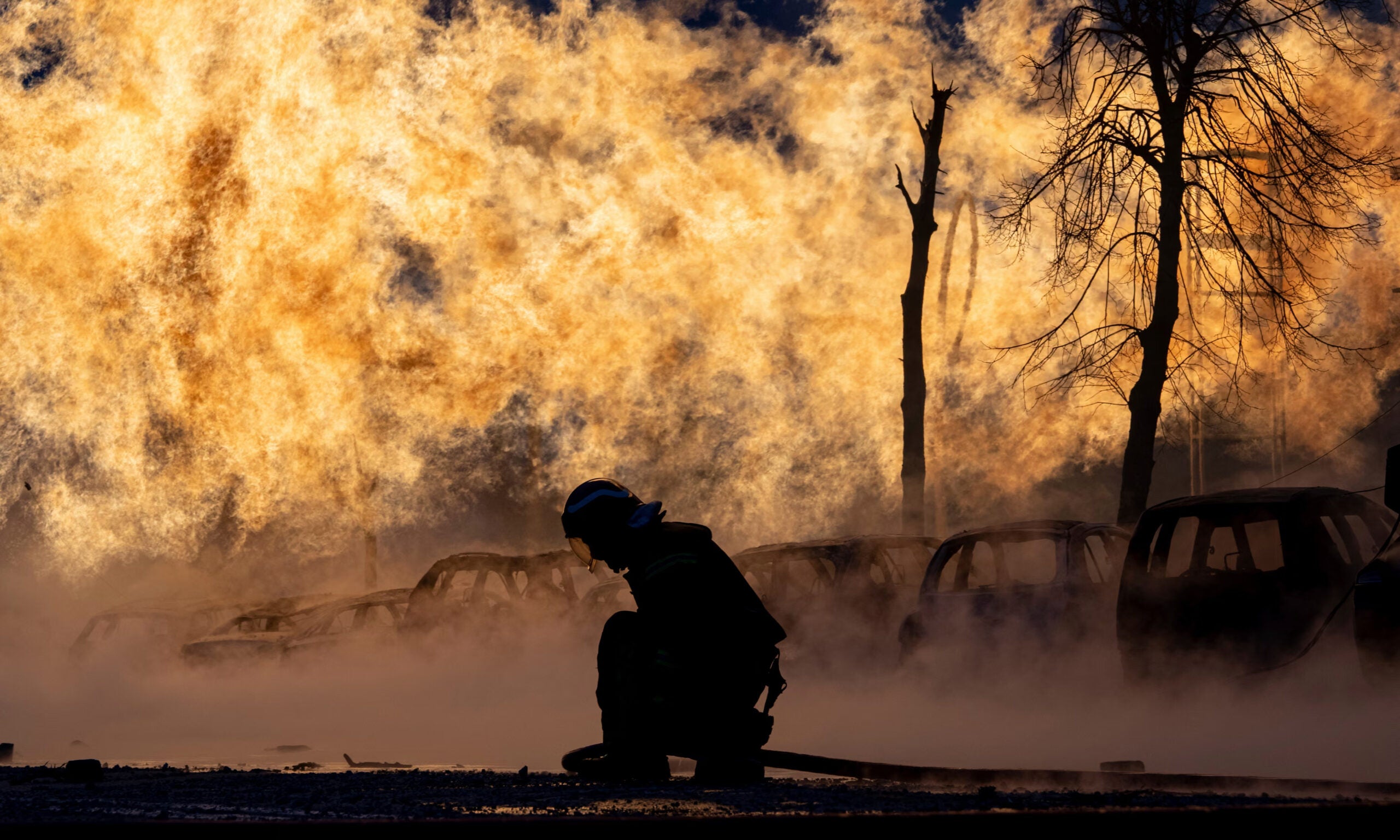
Armed conflict, and military activity generally, is one of the largest institutional contributors to global greenhouse gas (GHG) emissions. Russia’s war in Ukraine is no exception. The damage to the global climate caused by Russia’s invasion of Ukraine will be extensive and long-lasting. In a future peace deal, making Russia pay for the climate damage of the war is an important step that NATO-allied countries should take to establish a strong precedent for addressing climate-related damage in other conflicts.
International attempts to catalogue the climate damage of war have traction: these past few years have seen a more concerted and combined effort on the part of European intergovernmental bodies to track the economic costs of Russia’s illegal invasion, laying the groundwork for the financing of Ukraine’s reconstruction. In response to the UN General Assembly’s call for Russian compensation to Ukraine for damages, the Council of Europe established a registry of damage in May 2023, which includes an account of war-related emissions. Furthermore, a European Commission report in April 2025 assessed the impacts of the war on the environment and climate to help prepare for reconstruction. The most recent report by the Initiative on Greenhouse Gas Accounting of War (IGGAW) is the first to calculate a theoretical reparations bill for climate impacts of an armed conflict. Such a precedent would help protect the climate and demonstrate resolve against the mutually reinforcing nature of conflict and climate change.
The Climate Impact of War
According to the IGGAW report, published in February 2025, GHG emissions totaled 230 MtCO₂e during the first three years of the invasion. For reference, MtCO₂e, or million metric tons of CO₂ equivalent, measures the total climate impact of GHGs by converting them into an equivalent amount of CO₂ based on their global warming potential. 230 MtCO₂e is roughly equal to the combined annual emissions of Austria, Hungary, the Czech Republic, and Slovakia. The main drivers of such a number were emissions from military vehicles and equipment, destruction of energy infrastructure, unchecked wildfires, reconstruction, and war-related transportation.
GHG emissions from military activity alone amounted to 82.1 MtCO₂e. This accumulation made up 36% of total emissions after three years of conflict in Ukraine. Fossil fuel burned by military vehicles made up most of this number, with artillery fire making the rest. Notably, the increased use of drones did not noticeably lessen the use of or emissions from artillery, showing that automated warfare remains carbon-intensive.
Behind direct military activity, the destruction and rebuilding of civil infrastructure released 62.2 MtCO₂e in the first three years of the war; 27% of the total. The most intense of these emissions occurred in the first month of the invasion, when Ukraine’s cities sustained the most damage from bombings. Rebuilding what was destroyed following the cessation of hostilities will trigger the most drastic surge in GHGs as Ukraine accelerates its carbon-intensive iron and concrete industries.
In a country with one of the highest proportions of forest cover in Europe, conflict-induced fire took its toll. Wildfires released 48.7 MtCO₂e; 21% of the total. In 2024, the combination of fighting fires in conflict zones and a hot, dry year proved a particularly dangerous mix. That year, fires burned 965,000 hectares, surpassing the total area burned across the entire EU. Total wildfire emissions in Ukraine increased by 113% compared to the total burned in 2022 and 2023, with over 90% occurring along the frontlines.
These emissions were amplified by Russia’s deliberate and systematic attacks on Ukraine’s energy infrastructure. These attacks released 19 MtCO₂e in the first three years of the invasion, 8% of total emissions. Damage to oil depots and refineries, natural gas terminals, and deliberate wasteful flaring continue to release higher-than-average levels of methane. Attacks on the Ukrainian electrical grid, such as those which left the country with one-third of its prewar power in the spring of 2024, triggered the release of Sulfur Hexafluoride (SF6), an insulating compound in electrical systems and a greenhouse gas 24,000 times more damaging than CO2.
Finally, the diversion of commercial aviation and the transport of refugees released 17.7 MtCO₂e, another 8% of total emissions. Extended flight paths over Russian, Belarusian, and Ukrainian airspace compared to pre-war data indicate an additional 5 MtCO₂e per year. Transport of approximately five million refugees from Ukraine, though minimal in the past two years, amounted to 4.6 MtCO₂e over the first three years.
Assuming a social carbon-cost of $185 per ton–the amount used by government agencies to quantify the damage incurred by each ton of CO₂–wartime emissions amounted to $42 billion in carbon costs over the first three years of the invasion. To put that in perspective, direct European financial assistance to Ukraine over the same time period totaled $43 billion.
Facing the Problem
Systemic challenges hinder consensus on how to hold Russia accountable for this bill. While international humanitarian law provides some provisions on the protection of the direct environment, legal grounds for the compensation of damage to the atmosphere are weak or nonexistent. A long-awaited 2025 advisory opinion by the International Court of Justice (ICJ) discusses the obligation of states to protect the climate system from GHGs. This framework could, in future international law, afford the climate the status of a civilian object in war. However, the Court’s opinion only indirectly connected the climate impacts of war and states’ military activity in conflict.
Furthermore, NATO-allied militaries do not feel incentivized to subscribe to legal frameworks that could come back to hurt them in future conflict. This security dilemma dynamic will undermine militaries in the long run. Climate change is a threat multiplier that weakens the lethality of military forces and puts military personnel at undue risk without proper preparation. Allied countries and their armed forces should collaborate on legal frameworks now, before climate damage takes a larger role in the next conflict.
Finally, the Trump administration’s ambiguous and often contradictory signals in brokering a deal between Russia and Ukraine hinder unified NATO-allied resolve. Bold accounting work that lays the groundwork for a legal procedure, such as that of IGGAW, is critical in this period. A climate reparations package for Russia, however, will ultimately require the Trump administration’s input and approval.
Why Make Russia Pay
The groundwork laid by the UN, European Commission, and IGGAW is a start. Turning this momentum into a legal framework for holding Russia to account for its climate damage is the next step. Notwithstanding long-term climate impacts, it would be in the interests of a Trump-led global order to establish a precedent for reparations for wartime climate damage, for reasons of security and stability.
One reason is that tracking emissions during war is a crucial first step in linking the damage caused by industrial states to the growing climate costs borne by developing states. A war in the Global North disproportionally slows the development of poorer countries, since global emissions have the most acute impact on the Global South. From a U.S. geostrategic perspective, this linkage would expose a contradiction in the People’s Republic of China’s (PRC) soft power umbrella in the event of a kinetic attack on Taiwan and the breakout of a regional conflict in the Indo-Pacific.
Additionally, making Russia pay climate reparations sets a standard for addressing the mutually reinforcing nature of climate change and conflict. As exemplified by the damage from wildfires in Ukraine in 2024, the risk of aggravating the very problems that ignite and prolong regional conflict is increasing. Furthermore, armed conflict impinges on international climate efforts, reversing progress in states engaged in ongoing decarbonization and hindering the achievement of global climate mitigation targets. In the case of Russia, setting a standard is a way to articulate this unavoidable relationship and develop the right policies to address it.
Moreover, accounting for conflict-related emissions can help prevent a doom spiral that prevents countries from adhering to their climate goals in their bids for increased security. Countries are rapidly expanding military expenditures in response to a more threatening global order, which drives emissions. Militaries accounted for 5.5% of global annual GHG emissions in 2019, more than the combined emissions of shipping and aviation, and global military spending rose from $1.9 to $2.7 trillion between that year and 2024. These numbers are significant, given that each additional $100 billion in military spending generates around 32 MCO₂e. The additional cost of a climate reparations bill could help dissuade a potential aggressor, thereby lowering the overall instability that fueled military spending in the first place. A revisionist PRC in several years time may, for example, look askance at triggering such costs if it desires to maintain its leading role in driving down global emissions.
A Golden Opportunity
International institutions need to agree on how to measure conflict-associated emissions and punish with precision those nations that, through unjust war, cause it. They should begin by treating military activity as a sector in itself, and emissions from conflict as a driver of the climate crisis. Momentum exists in tracking and understanding this type of damage. It is the role of intergovernmental bodies, such as the ICJ, to develop the legal mechanisms to hold states accountable. The Russo-Ukrainian war is an opportunity to do so.
Views expressed are the author’s own and do not represent the views of GSSR, Georgetown University, or any other entity. Image Credit: The Guardian