U.S. and Israeli Checks and Balances Collapsed During the Iran War
One of the hallmarks and indeed strengths of democracies is their checks and balances – their ability to ensure that no single branch oversteps its authority or unilaterally undermines the rights of the people.
In the United States and Israel, this self-corrective system has done well to protect civil liberties and restrain the executive branch at home. But in foreign policy, it has historically underperformed – especially during war – due to three factors: the dominance of the U.S. president and Israeli prime minister, the phenomenon of groupthink, and the rally ‘round the flag effect.
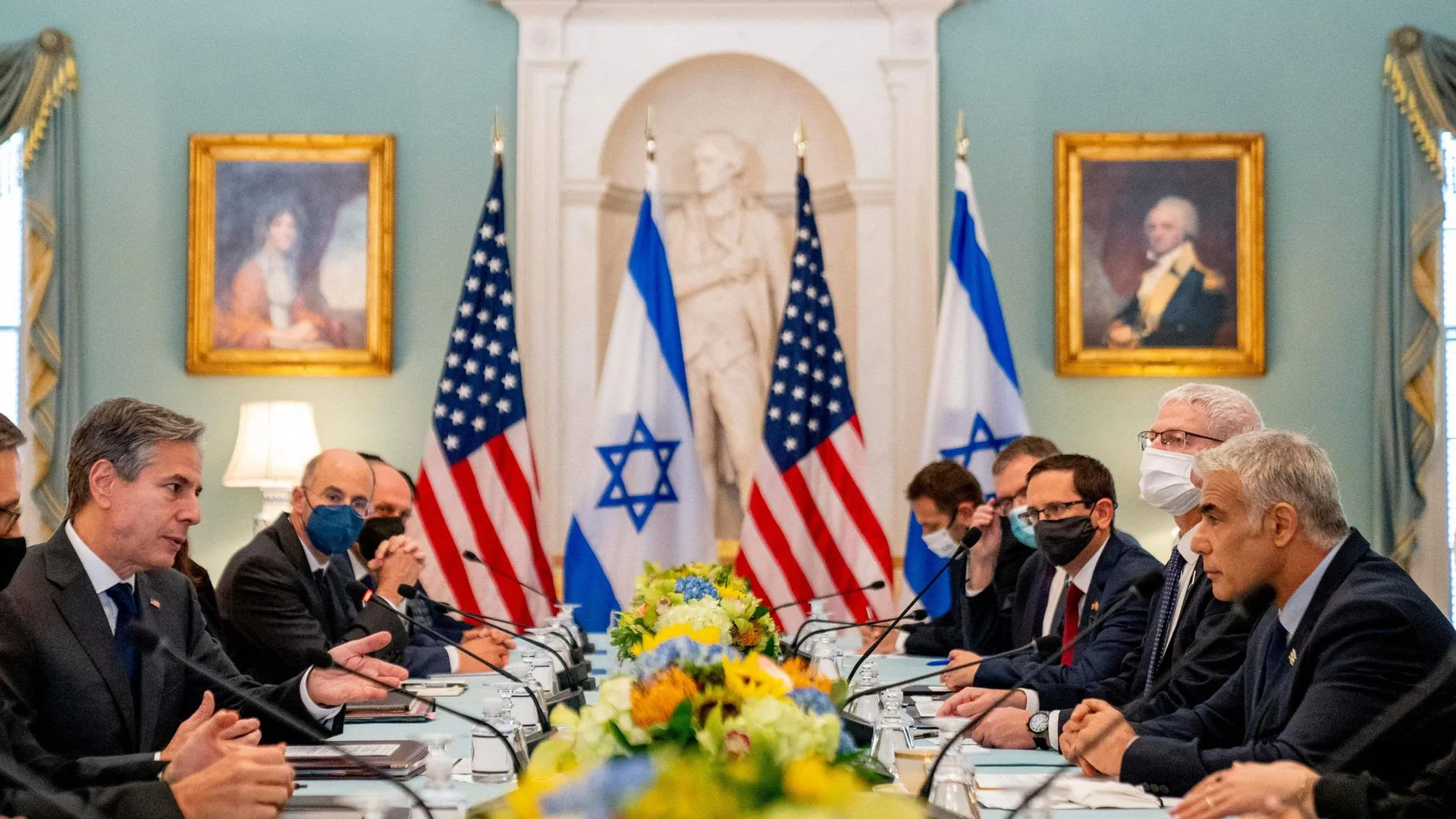
The U.S.-Israeli war with Iran has shown a serious malfunction of checks and balances because of President Trump himself and his peculiar style of decision-making; a Netanyahu-led cabinet that is more hardline than any in the history of Israel; and the Hamas terrorist attacks of October 7, 2023.
Checks and Balances at War
Historian Arthur Schlesinger Jr. famously described the U.S. president’s supremacy in foreign policy as the “imperial presidency” in which the commander-in-chief has accumulated enormous discretionary power in military affairs. Such executive dominance in foreign policy applies to Israel, too. The Israeli prime minister holds centralized control over foreign policy. He or she often bypasses the cabinet and the legislature (the Knesset) to prosecute wars and steer international negotiations.
Then there’s groupthink – the tendency of elites to maintain consensus even when evidence increasingly contradicts their assumptions and challenges their decisions – which suppresses alternative thinking and thus weakens checks and balances. Decision-making in the Bush 43 administration during the 2003 Iraq War is a good example of groupthink, as are the 1955-1975 Vietnam War and the CIA-backed invasion of Cuba in 1961.
Several of Israel’s wars in Lebanon were influenced by groupthink. Israeli officials believed that military intervention would be relatively brief, operationally uncomplicated, and strategically decisive – none of which turned out to be true. The October 1973 War is another famous example.
Rally ‘round the flag benefits any wartime leader, affording them great (albeit not indefinite) latitude in how to run the war and equipping them with a sturdy shield against political opposition. This effect was most evident after the 9/11 terrorist attacks, with George W. Bush’s public approval rating spiking.
Rallying around the flag is a regular occurrence in Israel as well, given how often the nation is at war. Whether it was during Israel’s wars with Arab states in the twentieth century or during its multiple large-scale operations against Hamas and Hezbollah over the past few decades, Israeli premiers have leveraged and sometimes exploited national unity for personal political gain while the media often cheered and curbed dissent.
Why Is This Crisis Different
Schlesinger’s “imperial presidency” phrase could not apply more to Trump’s handling of foreign policy. He has abolished the traditional Interagency Process, which in foreign policy is overseen by the National Security Council (the NSC) – the body that coordinates with various departments on national security policy. In May 2025, he cut the size of the NSC in half and streamlined its operations, which reduced the number of officials involved in policy oversight and decision-making.
Trump does not trust the bureaucracy, which he calls the “Deep State.” He often relies on his own instincts and prefers advice not from technocrats but from a small group that includes family members, personal friends, and former business partners. Throughout the war with Iran, nearly all of Trump’s cabinet members deferred to his instincts. Some, like Defense Secretary Pete Hegseth, were strong proponents of the war. Others, like State Secretary and National Security Advisor Marco Rubio, were less committed. Vice President JD Vance had serious concerns, but not serious enough to lead him to challenge his boss.
Chairman of the Joint Chiefs of Staff General Dan Caine and CIA Director John Ratcliffe did their job of explaining to Trump what could be achieved and what could go wrong in the war, especially with Netanyahu’s so-called plan of toppling the Iranian regime. Yet that was the extent of it. Neither had an interest in proactively sharing their perspectives and potentially getting on the wrong side of the president.
If dissent was muted in the Trump administration throughout the war with Iran, it was virtually non-existent in the Israeli cabinet. Netanyahu’s coalition government is represented by some of the most extremist figures in Israeli political life, including National Security Minister Itamar Ben-Gvir and Finance Minister Bezalel Smotrich.While Netanyahu may be more pragmatic than his radical colleagues, he is no dove either. He had been lobbying Washington for a war against Iran for decades, and he finally got his wish with Trump. But unlike Trump, he cannot survive politically if he alienates Ben-Gvir and Smotrich and they, in turn, collapse the ruling coalition (which is a major difference between United States and Israeli politics).While Trump is in the driver’s seat at home, Netanyahu is not. At every corner, Netanyahu’s colleagues have challenged his handling of the war in Gaza and prevented him from agreeing to a truce. On the issue of Iran, Ben-Gvir and others have made it clear that they are against any ceasefire deal between Washington and Tehran, or Hezbollah and Israel.
Outside the Trump administration and the Israeli government, there has been no meaningful resistance to U.S. and Israeli strategy for the war with Iran. In Washington, the vast majority of Republicans support Trump’s approach, while Democrats have repeatedly failed to mount any serious opposition to curb the president’s war powers. In Israel, criticism of the government has hardly challenged the assumptions and objectives of the wars with Iran and Hezbollah. Opposition leader Yair Lapid said “we should bomb their oil,” pressuring Netanyahu to lift any restrictions on the Israeli military.
Despite the obvious déjà vu in Lebanon and the traumas of the past, the Israeli military campaign there enjoys unanimous support – from the cabinet, from the opposition, and from the public. Naftali Bennett and Gadi Eisenkot, who might run for prime minister from the opposition camp in the next elections later this year, are criticizing Netanyahu not for repeating the same mistakes – occupying territory in southern Lebanon in hopes that this will provide security for northern Israel – but for not doing more in Lebanon. The Israeli media has joined the chorus of boos, with Channel 12 declaring it wants to see Beirut burning.
It’s impossible to explain the hardening and unification of Israeli views on Iran, Gaza, or Lebanon without considering the effects of Oct. 7 on the psyche of the Israeli people. On that day, Hamas launched an attack on Israel, killing more than 1,200 people, most of them civilians, and abducting 251 hostages. This was the largest massacre against the Jewish people since the Holocaust. The sense of profound insecurity that resulted from the attacks produced virtually unconditional support for the Israeli government, deep skepticism in the prospects of peace, and a strong desire for revenge, all of which provided a political opening for the most hawkish and radical voices in Israeli society.
Where to Go From Here
No U.S. president, including Trump, is obligated to take the counsel of any of his national security advisors. They are there to provide him with all the information he needs to make his decisions, not to impose their views on him. The commander-in-chief remains the ultimate decider, and he bears sole responsibility for his decisions and actions.
However, excluding professionals with experience and expertise from the inner circle of policy and diplomacy, and shunning diversity of views, is most unwise. The result tends to be a cabinet that is less talented, unwilling to speak truth to power, and eager to validate the president’s whims. Neither in the United States nor in Israel will checks and balances be revived overnight. One could argue that in Israel, it is more difficult to attain that objective given the state of war the nation has been in since its very founding in 1948.
In his 1990 award-winning book, The National Security Constitution: Sharing Power After the Iran-Contra Affair, Yale Law Professor Harold Hongju Koh warned Americans about the consequences of an increasingly unbound presidency in foreign policy. Thirty-six years later, he rang the alarm bells again with his newly updated book, The National Security Constitution in the 21st Century. His advice is well worth heeding: “We must look for structural solutions aimed at promoting regularized interbranch communication, encouraging executive accountability, and revitalizing Congress and the courts as institutional counterweights to the president.”
None of these measures is easy to implement, especially in today’s highly charged and partisan political environment. Although the issue of checks and balances is structural in nature, ultimately it is men and women of a less partisan ilk who have to lead the charge and push for more effective congressional (U.S.) and parliamentary (Israeli) oversight, and the upholding of independent judicial review.
Trump had the right instinct coming into office: too much bureaucracy in U.S. foreign policy (or any public policy) can slow down decision-making and stifle creative diplomacy. The challenge is not choosing between bureaucracy and executive flexibility but designing decision-making processes that preserve speed, oversight, and accountability.
Bilal Y. Saab is senior managing director of TRENDS US, an associate fellow with Chatham House, and a non-resident senior fellow with the Atlantic Council’s Forward Defense Initiative in the Scowcroft Center for Strategy and Security.
Views expressed are the author’s own and do not represent the views of GSSR, Georgetown University, or any other entity. Image Credit: Axiom