Lessons from Idlib: The Syrian Civil War and Iran’s Missing Opposition
The Sound of Silence: The Absence of Iranian Opposition Groups
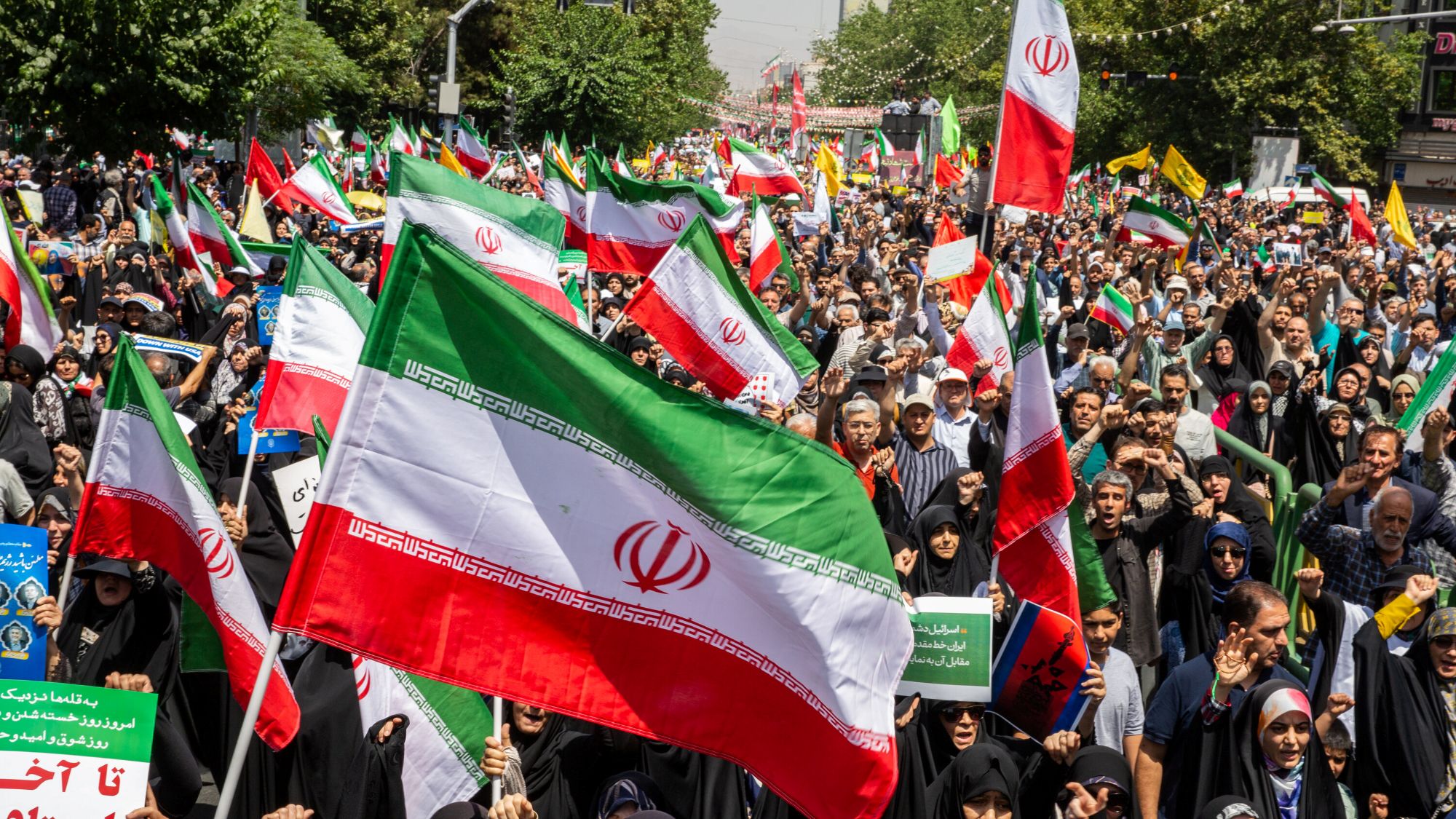
Operation Epic Fury, coming on the heels of Iran’s largest public uprising since the 1979 Islamic Revolution, has not yielded the same countrywide mobilization that preceded it. Unlike previous cycles of protest, the recent demonstrations were followed by large-scale U.S.-Israeli military operations, killing key elements of Iran’s leadership, including the Iranian supreme leader, Ali Khamenei. Unprecedented regime degradation raised expectations that internal opposition would capitalize on the vulnerability. Both President Trump and Prime Minister Netanyahu have appealed to that anti-regime sentiment, stating that the destiny of Iran is now in the hands of the people. The popular silence that has followed lies not in the absence of grievance, but in the absence of the structural conditions that make organized opposition viable. Understanding the prospects for organized opposition in Iran is therefore critical for assessing whether U.S. and Israeli expectations of regime change are achievable through popular mobilization alone.
While conventional explanations point to the Islamic Revolutionary Guard Corps (IRGC) and Basij’s continued coercive dominance and exclusive control over weapons, along with a battered but functioning command-and-control apparatus, these explanations are incomplete. The Syrian Civil War provides a more revealing framework for understanding the conditions that determine whether organized opposition can successfully overthrow an authoritarian regime. Stathis Kalyvas, a prominent scholar of civil war and political violence, argues that civilian support for opposition groups depends on territorial control—meaning success depends on the capacity of the opposition to provide order within an established geographic haven. The Syria case validates Kalyvas’ perspective, as Hayat Tahrir al-Sham (HTS)’s Idlib-based Syrian Salvation Government (SSG) generated the support base that, combined with organizational consolidation, a decade of attrition, and geopolitical fortune, ultimately facilitated regime change. The absence of these conditions undermines the emergence of organized opposition and reduces the probability of successful regime change. Without territorial control and governance, potential organizers confront a landscape in which the expected costs of rebellion vastly exceed any plausible prospect of success. Rather than treating Syria as a template, understanding the requirements for regime change in Syria reveals why calls for Iranian uprising underestimate the barriers organized opposition groups have to overcome.
The Opposition Landscape
The current Iranian opposition landscape is highly fragmented and lacks meaningful territorial presence inside Iran given that many opposition leaders operate in exile. Reza Pahlavi, the son of the deposed shah, has emerged as a viable opposition figure, but his support is concentrated in the Iranian diaspora. Pahlavi’s association with the unpopular former monarchy and decades of exile limit his domestic legitimacy and capacity to mobilize support inside Iran. Though he has been an outspoken supporter of anti-regime protesters, his exile risks framing him as an opportunist among those actively taking measures against the regime.
The Mojahedin-e-khalq (MEK), an Iranian opposition group founded in the 1960s that blends Marxist and Islamist ideology, is one of the most organizationally sophisticated exile groups. Although the group’s internal cohesion and connections to Western governments increase its strength, the MEK faces severe domestic hostility due to a history of violence against Iranian civilians, alignment with Saddam Hussein during the Iran-Iraq war in the 1980s, and international concern over the group’s former foreign terrorist organization (FTO) designation. The MEK’s involvement in anti-regime activities are more likely to delegitimize than strengthen the opposition effort.
Iranian Kurdish opposition groups—including the recently formed Coalition of Political Forces of Iranian Kurdistan—have maintained an armed presence for decades, operating primarily from bases in northern Iraq. Kurds constitute roughly ten percent of the Iranian population and have deep-seated grievances against the regime due to systematic economic, cultural, and political marginalization. Although many Kurdish opposition groups have denied allegations that they seek a separate Kurdish state, Iranian public doubt—combined with heightened nationalism—make Kurdish involvement in anti-regime opposition unpalatable to the Iranian public. Given the perceived incompatibility between Kurdish groups and other Iranian constituencies, it is highly unlikely that Kurdish groups can consolidate the widespread popular support needed for a sustained rebellion. The IRGC has exacerbated Kurdish weakness by denying Iranian Kurdish groups any territorial sanctuary, using periodic strikes in Iraqi Kurdistan since late February to prevent cross-border networks from mobilizing against the regime.
Lessons from Idlib: HTS and the Syrian Case Study
The Syrian Civil War serves as a powerful case study for understanding the potential and limitations of Iranian anti-regime opposition, and why popular revolution is ultimately unlikely. It demonstrates that the conditions necessary for opposition efforts to successfully overthrow regimes—opposition consolidation, territorial control, economic self-sufficiency, and fortuitous geopolitical shifts—are absent in Iran. This comparison also sheds light on the structural factors that an organized Iranian opposition group would face.
Consolidation of Power
Prior to its 2024 offensive, HTS emerged in 2017 as a coalition of militias that centralized power in Syria’s Idlib province, eventually transforming itself from a jihadi movement into a pseudo-political organization. That transformation resulted from HTS’s systematic elimination of rival factions, including Ahrar al-Sham, Jund al-Aqsa, and Nur al-Din al-Zinki, to prevent alternative coalitions from forming. HTS absorbed and eliminated those rivals, dismantling the factional fragmentation that characterized opposition groups in northwest Syria. HTS subsequently capitalized on its alternate governance monopoly in Idlib to position itself as the only viable successor to Bashar al-Assad when the moment came. The brutal consolidation of other opposition groups into HTS is inseparable from that outcome.
The Idlib Proto-State
HTS’ territorial control over Idlib provided it with the economic resources and political autonomy necessary to construct an alternative governing apparatus. In 2017, HTS established the Syrian Salvation Government (SSG) as a nominally civilian governing body, which it used to institutionalize its authority across Idlib’s administrative councils, courts, prisons, and financial institutions. HTS generated civilian dependency by providing millions of displaced Syrians access to essential services—water, electricity, and civil administration—binding the population’s survival to its own continued authority and generating the political legitimacy no purely militant organization could claim.
Territorial control also provided HTS with the economic means to sustain authority independently. HTS generated revenue domestically through taxation, customs fees, fuel distribution, and the regulation of cross-border trade, deliberately building internal resource streams that insulated it from foreign pressure. Control of the Bab al-Hawa crossing on the Turkish border alone generated an estimated $15 million in monthly customs revenue. These diverse revenue streams enabled HTS to pay fighters, fund domestic weapons manufacturing—including the development of light armored vehicles and drones—and sustain governance without dependence on external funding. Although HTS benefited from Türkiye’s political tolerance and border access, HTS’s domestic economic base meant external support enhanced rather than sustained its operations. Governance provided the economic foundation and political legitimacy that sustained HTS where military strength alone could not.
By pragmatically distancing itself from its former affiliations with the Islamic State and al-Qaeda, HTS gradually transformed from a transnational jihadist organization into a territorially rooted Syrian opposition movement. HTS emerged from Jabhat al-Nusrah, al-Qaeda’s former Syrian affiliate, which operated within a global jihadist framework that rejected national borders in favor of broader Islamic rule. HTS’s departure from that ideology reflected a prioritization of political utility over ideological purity. The pragmatic shift toward a local anti-Assad movement centered on governance allowed HTS to embed itself with Syrian society and emerge as a viable governing alternative to the Assad regime.
Attrition, Exhaustion, and Geopolitical Fortune
Organizational consolidation and institutional depth, though necessary conditions for HTS’s success, alone were insufficient. Two fortuitous geopolitical variables converged in the final phase of the conflict. The key pillars to Assad’s survival—Russian airpower and Iranian proxy support—were absent in the regime’s final years. Russia had reallocated much of its Syrian military presence to adjust to resource constraints from the ongoing war in Ukraine. Iran’s axis of resistance had been severely degraded after nearly three years of Israeli military operations following the October 7th terrorist attacks, forcing Tehran to prioritize its own national security over the survival of the Assad regime.
Beneath these geopolitical shifts lay a deeper exhaustion. More than a decade of civil war had degraded not only Assad’s military capacity but the will of the regime’s forces to sustain resistance. International sanctions had crippled the Syrian economy, leaving 90 percent of Syrians below the poverty line. Those grievances were compounded by a hollowed out military apparatus that had lost 100,000 soldiers from combat operations, desertions, and severe morale and resource shortages. The sudden withdrawal of Assad’s external allies exposed these vulnerabilities as demoralized regime forces abandoned their posts despite orders to defend against the HTS offensive.
Together, these conditions contributed to the fall of the Assad regime. Although the Syrian case study does not offer a template for opposition success, it illustrates the barriers that opposition groups face and must overcome to succeed. It is through this lens that Iranian opposition must be examined.
Iran Through the Syrian Lens: A Structural Comparison
Despite key differences, the Syrian Civil War helps reveal the conditions that made regime change possible—and why their absence in Iran calls into question the viability of producing regime change through popular mobilization alone. Syria represents the conditions under which organized opposition succeeded through consolidation, territorial control and governance capacity, economic self-sufficiency, and extraordinarily favorable geopolitical conditions. Kalyvas’s control-collaboration model demonstrates that in the absence of a functioning state, civilian support for armed groups is driven less by ideological alignment than by the provision of physical security. Accordingly, opposition movements succeed not simply by opposing the regime but by replacing it as the primary provider of order. No Iranian opposition group has approached the conditions Kalyvas identifies and that were present in the HTS case, and without them, the structural preconditions for viable challenge to the regime have yet to materialize.
HTS’s rise was predicated on years of violent consolidation that eliminated rival factions and produced a centralized organizational structure prior to its final offensive. The Iranian opposition remains highly fragmented across ideological, ethnic, and geographic lines—the monarchists, MEK, and Kurdish factions not only lack coordination but actively undermine one another’s legitimacy. Iran’s previous revolutionary movements demonstrate that success depends on unification. The 1979 overthrow of the shah succeeded because of the deference of factions to a singular, unifying authority in Ruhollah Khomeini. The current opposition has not replicated this dynamic.
Territorial control was the decisive causal mechanism of HTS’s transformation from a militant group to a governing authority. Control of Idlib gave HTS the institutional foundation and public support needed to sustain its offensive when the geopolitical opportunity arrived. No comparable condition currently exists in Iran as the IRGC and Basij still hold a monopoly on domestic security. In contrast, opponents of the regime—Pahlavi and the MEK—either operate in exile or, like the Kurds, remain isolated from the Iranian public. Iranian opposition groups will likely struggle to mobilize civilian support and anti-regime operations without territorial control. A second-order effect of HTS’s territorial control was the generation of independent revenue through taxation, trade, and resource management. No Iranian opposition group controls meaningful territory, let alone the infrastructure needed to generate economic self-sufficiency and sustain a rebellion.
HTS’s success was also contingent on elements of chance that cannot be replicated nor predicted. The reallocation of Russian forces to Ukraine and the decimation of Iranian proxy networks removed Assad’s two external lifelines. In Iran, however, the IRGC and Basij continue to prop up the Islamic Republic despite Operation Epic Fury’s severe degradation of the regime’s political, security, and intelligence leadership. Kalyvas’s model presupposes an at least partial absence of a functioning state, and by that threshold, Iran’s internal security architecture remains sufficiently intact to deny opposition forces the autonomy to organize, arm, and govern.
The conditions that enabled HTS to overthrow the Assad regime have not materialized in Iran. The absence of a prominent opposition group does not reflect a lack of anti-regime grievance but is indicative of fundamental constraints that prevent formation and blur the prospect of future success altogether. External calls for Iranian mobilization assume mass uprisings can materialize under conditions that are heavily stacked against a successful rebellion. Yet this assessment is not deterministic. Syria’s opposition landscape remained fragmented for nearly a decade, and opportunities for success appeared remote during Assad’s 2019-2020 offensive to retake Idlib. Iran’s current opposition landscape may therefore resemble Syria’s from 2011-2019 more than Syria’s from 2024, suggesting that structural constraints, while formidable, are not necessarily permanent. Whether the variables capable of shifting that landscape—sustained conflict, organizational adaptation, and geopolitical realignment—materialize remains uncertain. For the Iranian people, the Syria case is a reminder that the element of chance is unpredictable but capable of creating opportunities that often arrive unannounced.
Views expressed are the author’s own and do not represent the views of GSSR, Georgetown University, or any other entity. Image Credit: New York Times
