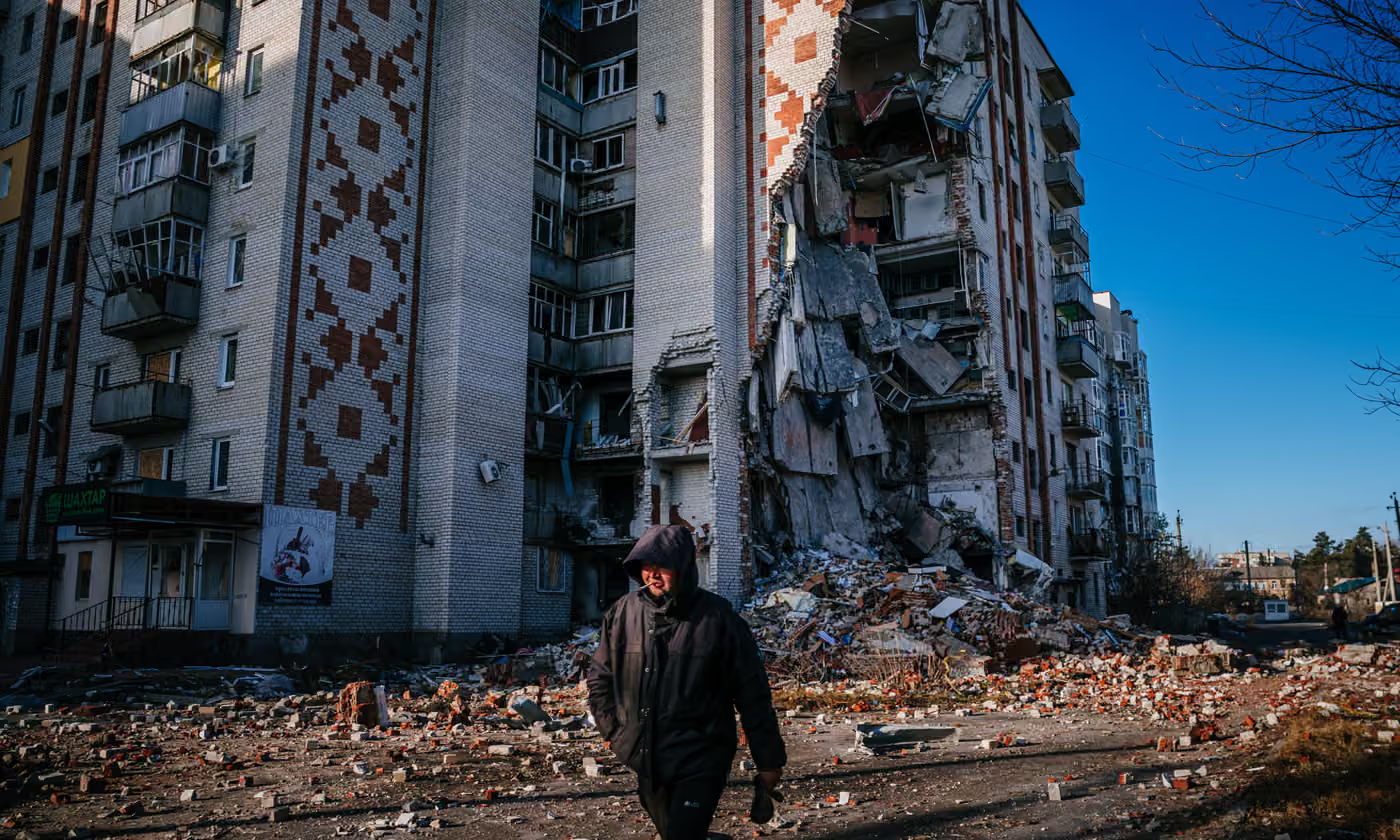
A Matter of When, Not If: Potential Flash Points for Russia’s Next Invasion of Eastern Europe
The inevitability of Russia’s aggression in Eastern Europe in destabilizing the regional security architecture comes after decades of revisionist ambitions. President Vladimir Putin’s deeply ingrained nostalgia for Russia’s regional dominance drives his determination to reassert Moscow’s influence across Europe and Eurasia through both hard and soft power to overturn the post-Cold War European security order.
Putin’s contempt for the North Atlantic Treaty Organization (NATO) is evidenced in word and deed, most notably in his 2007 Munich Security Conference speech, and his resentment of the collapse of the Soviet Union, which he considered a grave tragedy for Russians. Russia’s 2014 and 2022 invasions of Ukraine, its 2008 invasion of Georgia, and its continued hybrid aggression against NATO and European Union (EU) states are manifestations of Putin’s nostalgia and his staunch desire for Russia to be a regional hegemon. That longing may soon be translated into another conventional land invasion, coupled with a significant increase in hybrid warfare tactics. Russia is likely to soon turn its attention to one of the Baltic States, the Suwałki Gap in northeastern Poland, or Moldova.
Russia’s objectives are twofold: to overturn the current pro-West security order and establish regional hegemony, and to undermine international institutions, including NATO and the EU. Despite the militarily and economically strenuous war in Ukraine, Russia is planning to expand the conflict and go to war with Europe, likely in one of the following three flashpoints:
Low/Moderate Risk, High Reward – NATO’s Eastern Flank: Estonia, Latvia, and Lithuania
The three Baltic states are the NATO members most at-risk of increased Russian aggression. Russia’s existing policy is designed to undermine the capability and will of NATO’s Eastern Flank to resist Russian influence and military aggression. Russia carries out hybrid warfare in the Baltics, including disinformation, cyber attacks, sabotage, undersea data cable and pipeline attacks, among many other tactics, to destabilize their governments and cast uncertainty and fear among their citizens.
Russia’s most likely course of action is to declare a fabricated emergency facing a Russian ethnic minority group in one of the Baltic republics. This fabrication would likely mimic the Kremlin’s portrayal of Ukraine “planning military action against ethnic Russians in the Donbas region of Eastern Ukraine” in late 2021, a fake crisis which Russia used as an impetus to move troops into the Russian-occupied area of the Donbas. A similar move in a Baltic state would most likely occur in Narva, Estonia, where there is a relatively sizable Russian population. The fabricated emergency could look like a petty crime that just so happened to be committed against an ethnic Russian, or an alleged new law that Russia would accuse Estonia of using to oppress ethnic Russians. Russia’s response would again be conventional military force, just as it was in Ukraine in 2022. An invasion could either be carried out directly by the Armed Forces of the Russian Federation or a disguised infantry unit, such as a repeat of Russia’s “little green men” invasion of Crimea in 2014, whereby unmarked troops enter under the guise of restoring order.
An invasion of a NATO member-state would carry significant risks for Russia, particularly if Estonia (or another invaded member-state) successfully invokes the mutual defense Article 5 of the NATO treaty, forcing a NATO declaration of war on Russia. However, Russia may be tempted to invade Estonia despite this risk, given the latter country’s remoteness on the periphery of NATO and the logistical difficulty of bringing sufficient NATO armaments from elsewhere in the Alliance to defend it. Russia is also likely to limit its initial invasion to Narva, a relatively small area of Estonia with an important Russian ethnic minority. By limiting the extent of its incursion and by invading under the guise of “protecting” ethnic Russians, Moscow may seek to deter a larger NATO response.
Regardless, a Russian incursion into Estonia would have wide-ranging implications for NATO and expose fractures within the Alliance. Hungary, for example, has for years stoked friction within NATO and the EU due to its Russia-leaning interests. Hungary’s likely opposition to a strong NATO response to an invasion of a NATO ally would deepen divisions, potentially swaying some member states to argue against military action. Barring a large-scale NATO response, Russia could achieve significant, low-cost gains by invading Narva—it would “reunite” Russians with their homeland, a goal Putin noted in the 2007 speech, and cause significant destabilization and disagreement within NATO on how best to respond. Furthermore, unchecked Russian gains in the region would instill greater fear and doubt among NATO allies, especially those on the Eastern Flank who are vulnerable due to geographic proximity to Russia.
High Risk, High Reward: Poland’s Suwałki Gap
The Suwałki Gap is a narrow, 40-mile-long land corridor in Poland between the Russian exclave of Kaliningrad and its client state of Belarus. The corridor is the only land border between the Baltic states and the rest of NATO. Due to its geographic proximity to Kaliningrad, the only year-round operational Russian sea port in the Baltic Sea, the Suwałki Gap is one of the most strategically important, as well as one of the most sensitive and at-risk, geographic areas in the NATO alliance. Russia could launch an attack on the Suwałki Gap from both Kaliningrad and Belarus, and use its significant anti-access/area denial (A2/AD) capabilities in Kaliningrad to posture its military on the offense to gain an advantage against a NATO counterattack. Should Russia succeed in capturing the corridor, the land connection between the Baltic states and the rest of NATO would be effectively severed, and Russia would gain an invaluable link from Kaliningrad to the mainland.
Such an invasion would amount to all-out war with the NATO alliance and would carry tremendous risk for Russia. Poland is a well-armed country with many NATO and U.S. military bases on its territory. A “little green men”-style invasion of Poland would not be plausible or feasible, as there are no ethnic Russians around the Suwałki Gap to ostensibly protect, and Poland could easily rebuff such an incursion. Thus, Russia would only invade the Suwałki Gap if it were ready and willing to engage in a protracted, high-level conflict with NATO.
As Kaliningrad is heavily militarized, a Russian surprise attack on the Suwałki Gap, particularly if coordinated with Belarus, may yield initial success. Russia may use an initial period of uncertainty among NATO allies following such an invasion to target the smaller and less well-equipped Baltic states, which could be its most significant benefit.
Moderate Risk, Moderate Reward — The Non-NATO State: Moldova
A third possibility would be for Russia to escalate its activities in Moldova. Russia has been supporting the breakaway region of Transnistria since the early 1990s, when it separated from Moldova following a four-month war. Transnistria, which straddles the Dniester River and the Moldovan-Ukrainian border, has a Russian military base and around 1,500 Russian troops, ostensibly present as “peacekeepers.” The region is largely economically dependent on Russia, while offering the Russian military a strategic foothold in Central and Eastern Europe.
Moldova is an aspiring EU member-state, and thus a frequent target of Russian disinformation and hybrid warfare. As Putin seeks to prevent additional states from joining international institutions that it considers adversarial, Russia has an incentive to increase the depth and breadth of hybrid attacks in Moldova to break down its EU aspirations. By maintaining rampant disinformation campaigns and stoking low-level conflict to sow division among the citizenry and government, Russia can gain the upper hand to deter the EU accession process. Additionally, given Moldova’s geographic, cultural, and economic proximity to Romania, a strong opponent of Russia’s war in Ukraine, Russia has an incentive to extend a heavy grip over both countries and expand its anti-Western influence operations.
Russia may seek to reignite tensions in Moldova in response to progress on Moldova’s accession to the EU. Russia could easily do so using its existing military resources in Transnistria or by deploying additional troops to the breakaway region. By attacking Moldova, Russia may seek to distract Romania and other NATO allies in the region from their support for Ukraine. Russia could also use Moldova as a testing ground to gauge NATO’s and the EU’s response to Russian aggression against other non-member states. Given the deep relationship between Romania and Moldova, a Russian mobilization of troops in Transnistria to prop up a larger invasion in Moldova would likely spur a significant humanitarian and political response from Romania, thus reducing its support to Ukraine.
Mitigating Risk: The Road Ahead
Russia’s political and military doctrine, which is rooted in revisionist aims, indicates that another Russian invasion of Europe is forthcoming. President Putin’s plague of nostalgia to re-establish regional hegemony and overturn the post-Cold War European security architecture will continue to influence political action in the region to build up an entry point for a conventional land invasion. The Baltic States, Poland’s Suwałki Gap, and Moldova remain the most vulnerable entry points in Eastern Europe. Russia’s extensive use of hybrid warfare in the region, coupled with revisionist and expansionist aims, makes the likelihood of aggression a question of when, not if.
To prepare for a likely Russian invasion, NATO must implement an expansive, proactive, multidimensional deterrence strategy rooted in conventional defense in the land, air, and sea domains and an unparalleled hybrid defense strategy that trumps Putin’s playbook. A conventional military buildup along the eastern flank should include rapid mobility and counter-mobility infrastructure, accessible munitions stockpiles, tanker fleets, and robust air defense systems. NATO must execute a forward-defense posture by stationing troops along the eastern flank at the most dire risk of a Russian invasion, to include the north-to-south border from Estonia to northeastern Poland. Hybrid defense capabilities should hinge on cyber defense, with critical attention to energy, communications, and government sectors, which are most vulnerable to a Russian cyber attack. NATO should consistently seek to improve its cyber defense capabilities, not just to respond to a potential cyber infrastructure attack, but to act as a deterrent.
Finally, NATO cannot withstand a Russian attack without a forward-defense posture that integrates leading technologies in the conventional and unconventional warfare space. The adoption of unmanned systems, next-generation rotorcraft, remotely piloted aircraft, and the production of a sixth-generation fighter jet will outpace Russian military capabilities.
Views expressed are the author’s own and do not represent the views of GSSR, Georgetown University, or any other entity. Image Credit: The Guardian