Will CPEC Weather the Growing Storm of Militant Violence?
Increasing militant violence in Pakistan, particularly attacks on People’s Republic of China (PRC) nationals and infrastructure, threatens the viability of the China-Pakistan Economic Corridor (CPEC). If attacks continue, the violence could constrain PRC investment and deepen Pakistan’s domestic instability.
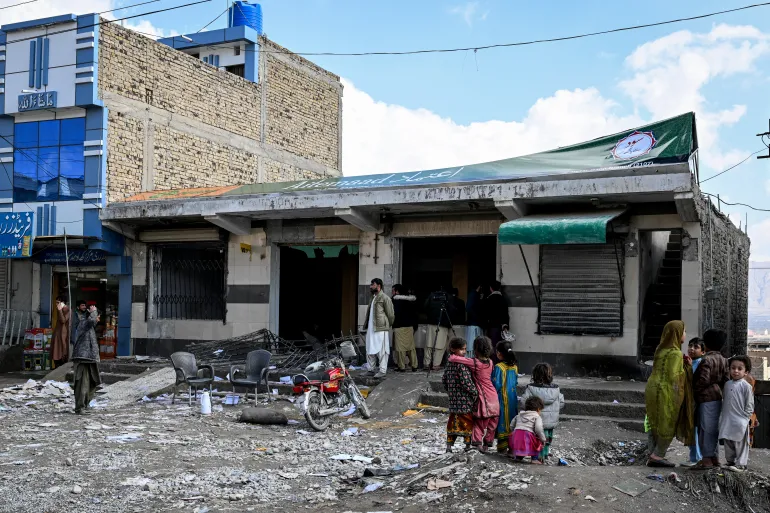
In late January, tensions between the Baloch insurgency and the Pakistani government escalated as the Baloch Liberation Army (BLA) launched a series of coordinated attacks across the Quetta, Gwadar, Mastung, and Noshki districts. The forty-hour battle marked the deadliest confrontation for BLA militants in decades, leaving nearly two hundred people dead.
The attacks reflect the growing frequency and sophistication of terrorist violence in Pakistan, driven by Baloch separatists and other militant groups, most notably Tehrik-i-Taliban Pakistan (TTP). According to the Pak Institute for Peace Studies, terrorist attacks in Pakistan increased by 34% between 2024 and 2025, and terror-related fatalities rose by 21% within the same timeframe. Far from isolated episodes, these figures indicate a structural increase in violence, a trend that raises long-term issues for CPEC investments.
Bombing Is Bad for Business
Militant groups within Pakistan, particularly the BLA and TTP, continue to target PRC nationals and disrupt projects associated with the CPEC. CPEC, the PRC’s flagship program within the Belt and Road Initiative, represents an estimated $62 billion in PRC investment. Pakistan’s Ministry of Foreign Affairs describes the project as “the cornerstone of Pakistan and China’s All-Weather Strategic Cooperative Partnership. . . . envisioned to promote win-win development and connectivity in the region.”
Local insurgent attacks pose a serious threat to PRC development initiatives at Gwadar Port, Pakistan’s third deep-sea port and the strategic anchor of the CPEC partnership. An extensive line of infrastructure projects, once completed, will link Xinjiang to Gwadar. The project connects the western PRC to the Indian Ocean through the Arabian Sea, with the potential to serve as a base for the People’s Liberation Army Navy (PLAN).
Gwadar’s strategic importance and symbolic value as the linchpin of CPEC presents a potent security problem for both PRC investors and Islamabad, as Gwadar lies in the volatile Balochistan province. The project’s visibility both heightens its value as a target for militant groups looking to express grievance towards foreign exploitation and invites higher scrutiny of Pakistan’s efforts to safeguard international investment.
While Balochistan encompasses 44% of Pakistan’s territory and possesses a wealth of natural resources, it remains the most thinly populated and underdeveloped province in Pakistan, with mounting grievances against the Punjabi-dominated government in Islamabad. The expansion of CPEC has only heightened unrest, highlighting long-held concerns over resource extraction that fails to benefit local populations.
These grievances are not merely economic but deeply emotional and nationalist. Baloch revolutionary poet Mubarak Qazi captures this sentiment: “Foreign ships will arrive / Polluting and poisoning my sea / But we will stand / We will pay any price to defend our land.” Such identity-based narratives reinforce militant recruitment and legitimize attacks on PRC-linked infrastructure.
BLA has taken advantage of growing resentment, increasingly targeting PRC nationals and investments. In 2022, a BLA-associated female suicide bomber targeted Karachi’s Confucius Institute in a blast that killed three PRC teachers. A suicide attack carried out by the BLA in 2024 targeted PRC engineers working in the Sindh province, resulting in two deaths and several more injuries. In addition to harming PRC nationals, BLA works to damage CPEC infrastructure. The insurgency’s January attacks, along with the hostage crisis it perpetrated with its March 2025 hijack of the Jaffar Express, demonstrate increasing tactical sophistication and the capacity to inflict growing costs on both PRC development and Pakistani government infrastructure throughout the province.
To complicate Pakistan’s counterterror efforts, the surge of Baloch insurgent attacks against PRC nationals and infrastructure coincides with what the New York Times dubbed Pakistan’s “fiercest Taliban insurgency in a decade.” Following the Taliban’s takeover in Afghanistan, the TTP gained significant momentum, operating from an expanded base across the Durand Line and drawing greater material support from Kabul. TTP’s attacks have proliferated in recent years, with the Armed Conflict Location and Events Data Project reporting over six hundred attacks in 2025 (up from 2024, which also saw a 70% increase from 2023). Like BLA, TTP has also engaged in attacks against PRC nationals, including killing five engineers working on Pakistan’s Dasu Dam project in 2024, a repeat of a similar suicide bombing in 2021.
Now, after a decade of CPEC, the program faces continued delays—stakeholders have completed less than 50% and have progressed towards only about 70% of planned projects. Continued attacks, compounded by institutional weakness, political unrest, and economic turmoil, have stalled progress and strained Beijing’s development outlook towards Islamabad.
Risk-Reward Calculus
Beijing faces a dilemma. Withdrawal risks strategic loss, but continued investment exposes PRC nationals and capital to escalating violence.
So far, the PRC has affirmed its continued commitment to its foremost South Asian partner. The PRC Ministry of Foreign Affairs has emphatically condemned terrorist violence and pledged increased anti-terrorist support to Pakistan. Beijing has also expanded counterterror exercises between Pakistan and the CCP’s People’s Liberation Army (PLA).
By other metrics, however, Beijing’s support appears to be waning. Although Pakistan has deployed thousands of troops to secure infrastructure projects in high-risk areas, unrest persists. The PRC may look to hedge its bets—Beijing has considered the use of private security personnel and has slowed or stalled funding for several major projects.
Perhaps most strikingly, in 2024, the PRC issued a rare public warning to Islamabad. Ambassador Jiang Zaidong cautioned, “It is unacceptable for us to be attacked twice in only six months. . . . Security is the biggest concern. . . . [and] a constraint on CPEC.”
Despite Pakistan’s scaled-up efforts to stifle unrest since the statement, attacks continue to trend upwards.
The Instability Cycle
For Pakistan, the stakes are high. Following a major national debt crisis, Pakistan continues to underperform economically. The country must address problems with living standards, infrastructure, education, healthcare, food insecurity, and unemployment. As Pakistan faces high population growth alongside stagnation or negative growth in key sectors like agriculture and construction, poverty continues to increase. Meanwhile, instability has fueled brain drain, eroding Pakistan’s network of skilled labor.
CPEC investment has brought much-needed aid to Pakistan’s stagnant economy—the projects have generated over 155,000 jobs and jump-started infrastructure development in impoverished regions. The Pakistani government continues to tout CPEC as a transformative initiative for Pakistan, claiming, “The country portrayed as terrorist hub, has now turned into a safe haven for billions of dollars investment.”
Ironically, the country’s ongoing failure to effectively address militant violence now poses one of the most serious threats to ongoing, successful foreign investment projects. Given the upward trend in attacks directed at PRC nationals and infrastructure, Beijing may choose to reconsider its investment strategies, limiting the threat of violence or loss by pulling out of high-risk ventures or affording less flexibility or partnership opportunities to local partners. Some investors have moved to tighten oversight of their assets, while others have chosen to shift capital investments to other international partners.
Pakistan’s violence and underdevelopment form a mutually reinforcing cycle. Limited economic opportunity, combined with foreign involvement that promises to offer it, generates local grievances that drive violence. Violence then discourages investment and stalls development.
While China and Pakistan face growing frustrations, the countries have built an enduring partnership as “Iron Brothers,” solidified in principles of mutual trust and support, development and investment, and security coordination. A continued CPEC partnership is near certain for the foreseeable future. While complete collapse appears improbable, continued violence will likely constrain growth as Beijing’s confidence in Islamabad continues to falter—a trend that threatens to worsen Pakistan’s already dire stability crisis.
Views expressed are the author’s own and do not represent the views of GSSR, Georgetown University, or any other entity. Image Credit: Al Jazeera