PRC Academic Diplomacy in Latin America Demands a U.S. Response
In November 2024, Xi Jinping traveled to Peru for the Asia-Pacific Economic Cooperation Summit. He joined Peruvian President Dina Boluarte to inaugurate a $3.5 billion deep-water port at Chancay, 80 kilometers north of Lima. The port received over $1.3 billion in PRC investments and will be operated for the next 30 years by Cosco Shipping Ports, a PRC state-owned enterprise.
This milestone is only the latest instance of a significant increase in cooperation between the People’s Republic of China (PRC) and Latin America. This progress has been enabled by decades-long investments in soft power, through which the PRC presents itself as a reliable partner committed to mutually beneficial cooperation. The PRC is particularly adept at using education as a forum to boost its reputation, a process known as academic diplomacy. An elevated PRC presence in Latin America threatens to erode U.S. influence in the Western Hemisphere. To rebuff these inroads, the United States should invest in academic diplomacy to improve its own image through constructive initiatives.
Soft Power and Academic Diplomacy
Joseph Nye first conceptualized soft power in 1990 as the ability to get others to want what you want. Where coercive “hard power” aims to forcibly compel another to follow one’s will, soft power aims to change their preferences. To reach this end, a state must change another society’s beliefs to view them more favorably. This process begins at the individual level: through person-to-person engagement, individuals form strong personal and professional bonds that link societies together. As the U.S. State Department acknowledges, in the modern era, “relationships are held together by much more than just government officials.” As individual relationships accumulate, societal attitudes change.
Academic diplomacy is a key facet of soft power. This process involves using educational initiatives to facilitate interaction and promote a particular view. To realize this goal, states sponsor initiatives like language lessons, university partnerships, and exchange programs.
PRC Academic Diplomacy in Latin America
Over the past decade, the PRC has invested in soft power to improve its image across Latin America. This messaging emphasizes the “win-win” benefits of cooperation, promoting PRC history and culture while downplaying faults. These efforts facilitate cross-cultural connections between the PRC and Latin America, thereby strengthening the prospect for partnership.
Academic diplomacy is a linchpin of this approach. Confucius Institutes serve as the PRC’s flagship initiative in this space. These programs offer Mandarin language and PRC cultural instruction through partnerships with local schools and universities. The PRC’s Communist Party’s Ministry of Education sponsors the Institutes, strongly influencing their hiring practices and learning materials. Critics accuse Confucius Institutes of using political loyalty as a criterion in the hiring process and censoring certain topics from learning materials to present a one-sided view of the PRC. These criticisms are not unfounded: former PRC propaganda chief Li Changchun stated in 2009 that Confucius Institutes “are an important part of the PRC’s overseas propaganda setup.” Confucius Institutes argue that they have benign intentions based on mutual respect and mutual benefit. Regardless of their nature, these Institutes have been welcomed in Latin America as mutually beneficial spaces for dialogue.
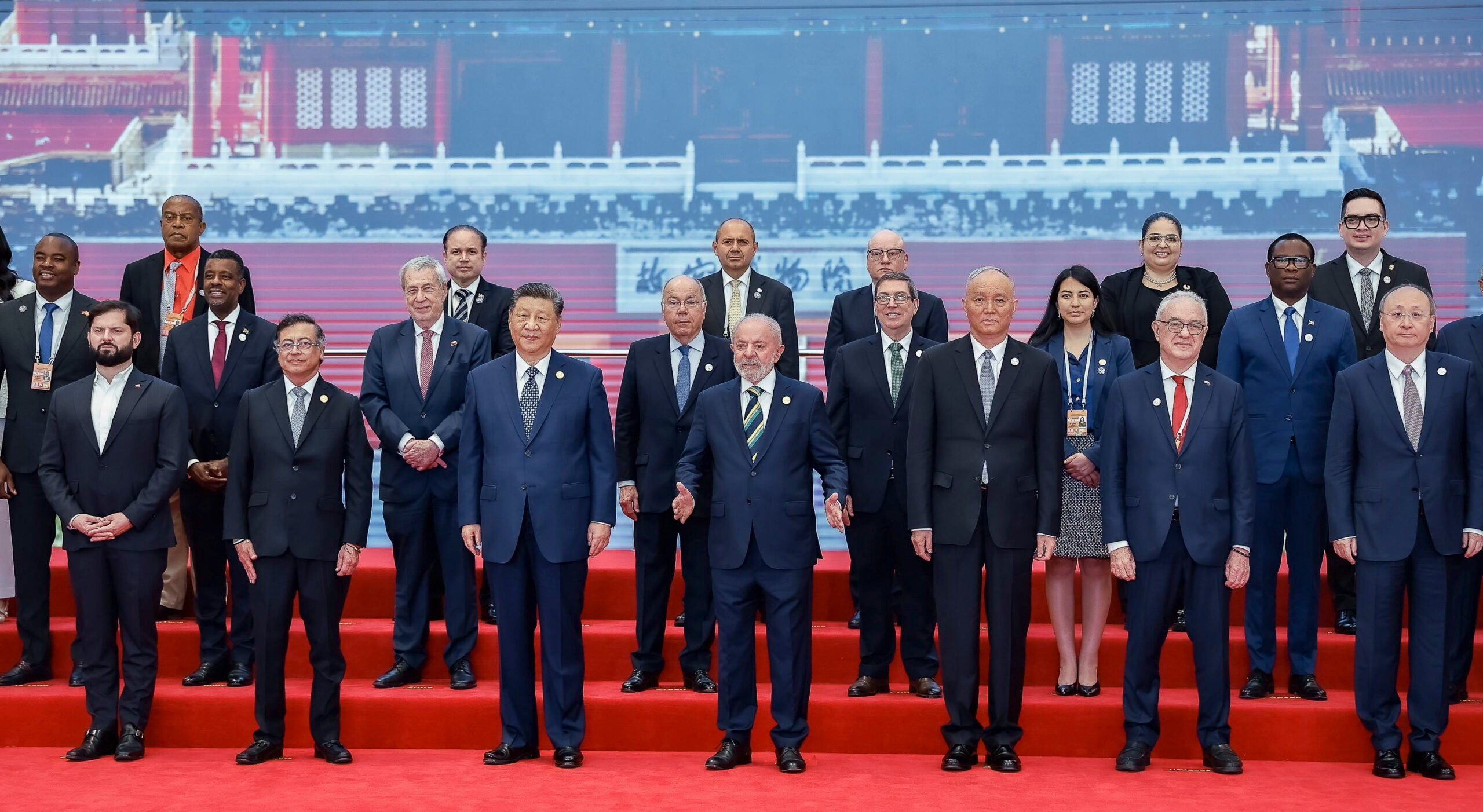
Beyond Confucius Institutes, PRC entities maintain over 1,000 educational partnerships across Latin America. These initiatives include research support, institutional partnerships, and exchange programs. PRC institutions present themselves as cooperative partners to the Global South in addressing a myriad of issues, from wealth inequality to the digital divide. For example, during his 2024 state visit to Brazil, Xi Jinping signed a memorandum of understanding between Tsinghua University and the Federal University of Rio de Janeiro to establish the “China-Latin America Youth Responding to Global Challenges Program.” This initiative aims to integrate educational resources between the PRC and Latin America to develop solutions to poverty, simultaneously creating opportunities for dialogue between students. Huawei’s “Seeds for the Future” initiative sponsors training sessions, competitions, and summits that teach students about technological innovation and environmental sustainability. With UNESCO, Huawei held the “2024 Seeds for the Future Summit” in El Salvador. Since its 2014 launch in Latin America, over 2,000 students have benefited from “Seeds for the Future”. These programs enable the PRC to demonstrate its commitment to transnational issues, thereby developing a positive image within Latin American societies. A 2025 article in Montevideo-based publication L21 praised the partnership in the digital space between Latin America and the PRC as a “model example for the world”.
This strategy has delivered results for Beijing, as Latin American countries have become more receptive to Beijing’s foreign policy goals in recent years. This has been particularly evident in Latin America’s treatment of Taiwan. Since 2017, Panama, El Salvador, Nicaragua, and Honduras have all cut ties with Taiwan and recognized the PRC. In 2023, the Central American Parliament voted to expel Taiwan as an observer country and replace it with the PRC.
Some argue that economic partnership, rather than soft power, has driven this increased connectivity between Latin America and the PRC. However, soft power has contributed to the success of these economic initiatives. States’ preconceived notions about the PRC shape how they approach economic engagement with that country. Societies that view the PRC as a predatory power bent on irredentism are unlikely to favor greater economic ties. Societies that view the PRC as a benign rising power, interested in mutual growth and prosperity, may favor greater cooperation. Through its soft power initiatives, the PRC is promoting the latter view.
Implications
As Latin American countries become more receptive to the PRC’s worldview, they become less receptive to the United States’. In an increasingly bipolar world characterized by great-power competition, this is unacceptable. More important than ever, the United States should be doubling down on academic diplomacy to build constructive partnerships in Latin America. The key is to offer constructive alternatives to PRC initiatives. To that end, the United States should expand the number of Fulbright Scholarships offered to Latin American countries; this facilitates person-to-person connections, building links between communities. In addition, the United States should offer financial incentives for universities to expand their Latin American Studies programs, generating opportunities for student exchanges and research partnerships. Finally, the United States should host conferences on transnational issues to bring academics together, building strong connections while demonstrating the United States’ commitment to global issues.
Through academic diplomacy, the PRC has successfully positioned itself as a cooperative partner across the Global South. Unless the United States presents itself as a constructive alternative, the PRC will continue to expand its presence in the Western Hemisphere. To compete, the United States should invest in soft-power initiatives to promote its image and foster cross-cultural connections. Education is a great place to start.
Views expressed are the author’s own and do not represent the views of GSSR, Georgetown University, or any other entity. Image Credit: Flickr