Russia in the Sahel: How Wagner Promised Security and Delivered Chaos
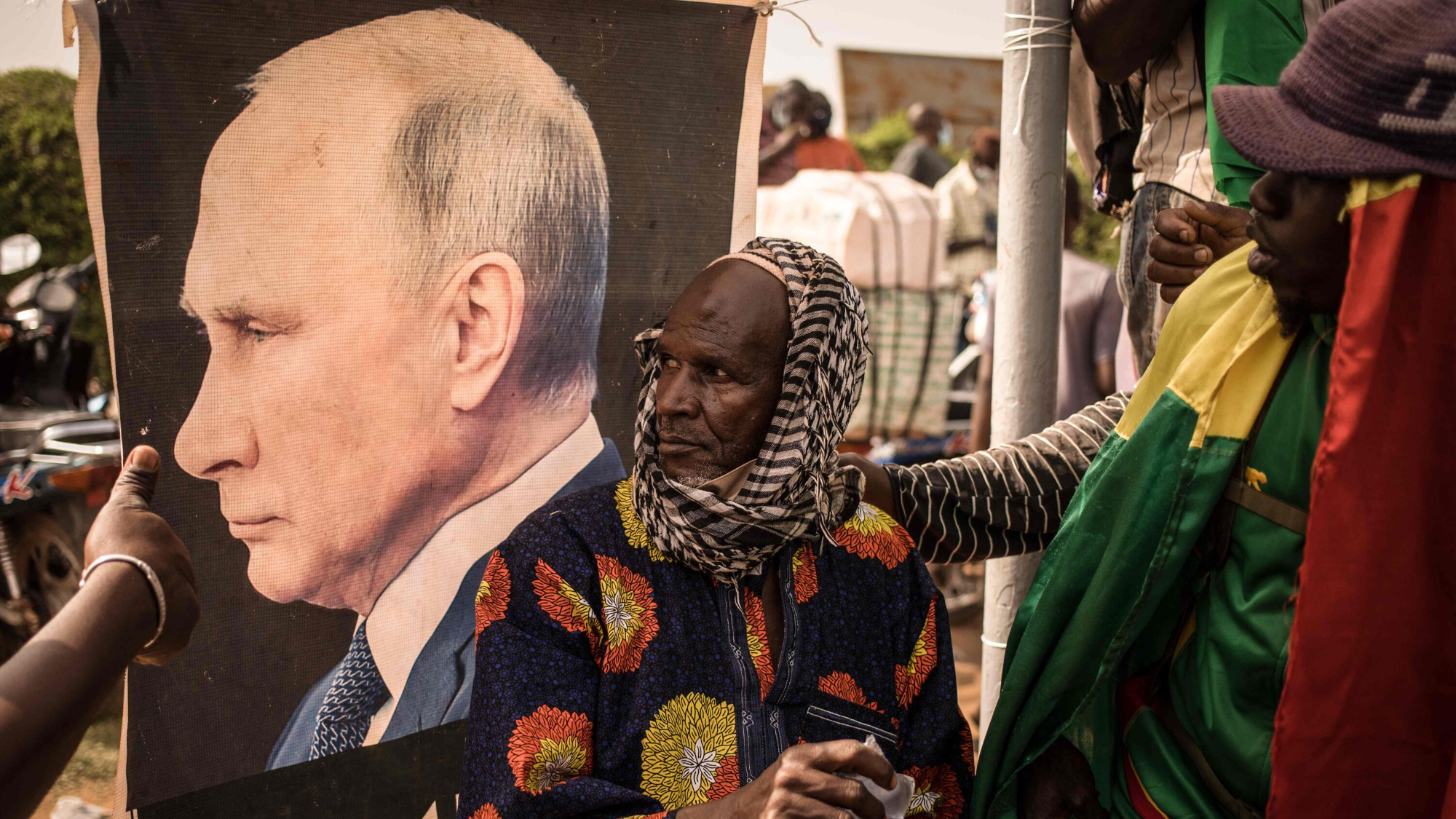
Over the last five years, Mali, Burkina Faso, and Niger have pivoted from Western influence, culminating in their expulsion of Western forces from their borders and embrace of alternative partners like Russia. Under promises of nationalistic grandeur, new governments hoped to become less reliant on old colonial powers and assert their independence from institutions perceived to be rigged against them. Understanding that they still require foreign security assistance to combat rampant insurgencies, these Sahelian states host both Russian private military contractors (PMCs) and official uniformed Russian military personnel to fight Salafi-jihadists embedded throughout the region. These forces replace their former Western, mainly French, partners. Aligning with the Russian security apparatus has cultivated further destruction, exploitation, and instability at civilians’ expense.
Breaking with Colonial Legacies, Breaking with the West
In July 2024, Mali, Burkina Faso, and Niger formally established the Confédération des États du Sahel (AES). AES serves as a mutual economic and security alliance in order to become more self-reliant and reject old Western partnerships. After juntas seized power in Mali in 2021, Burkina Faso in 2022, and Niger in 2023, the Western-backed Economic Community of West African States (ECOWAS) sanctioned the new military regimes. This move fragmented the coalition, creating two competing blocs in West Africa. Experienced officers in each military justified their seizure of power by recognizing rising dissatisfaction with perceived government inaction towards economic troubles and jihadist terrorist groups. The new military juntas promised to crush jihadist militants on their own terms and without a Western presence. A foundational characteristic of the AES’ charter is an explicit focus on trilateral cooperative security, evolving the relationship between the three member states to ostensibly reduce the need for Western support.
AES states face encroaching jihadist terrorist groups waging insurgencies, rebellious ethnic militia groups, and an ever-present fear of further coups. Islamist forces such as Jama’at Nusrat al-Islam wal Muslimeen (JNIM), the Islamic State in the Greater Sahara (ISGS), and the Islamic State in West Africa Province (ISWAP) conduct insurgencies against the incumbent governments in the Sahel—plaguing these Muslim-majority nations with violent competitions for sovereignty and perceived legitimacy. Working both for and against these groups are a variety of ethnic militias in each state. Historic grievances have pushed certain minority groups, such as the Tuareg in northern Mali, to align with terrorist groups to achieve their goal of independence. Other substate groups have used the instability to ignite new hostilities against their respective state and rival ethnic groups, further complicating the security situation. Military juntas cite these regional security concerns as justification for their political intervention which further hinders each nation’s political stability.
Historically, France provided a professional fighting force for training and counterterrorism operations that buttressed the Sahel’s state military capacities. In a pivot away from the West, AES states have turned to a Russian private military company (PMC), The Wagner Group, as a professional, experienced, and non-Western replacement. Prior to the West’s expulsion, Wagner maintained various contracts throughout the Sahel. Although small, Wagner’s preexisting presence allowed AES states to feel confident expelling their experienced Western partners—seeing a likely Russian replacement. AES expected Wagner to bring the same level of skills and effectiveness as its Western counterparts, while also operating unencumbered by restrictions stemming from Western humanitarian concerns.
Severing ties with the West in favor of Russia is not unpopular in the Sahel. For decades, France’s colonial legacy has motivated feelings among Sahelian populations of lingering exploitation by French economic endeavors and security presence in the region. French companies’ domination of local resources and a reliance on the French currency have fueled nationalistic sentiments. Accusations of French political interference and ongoing instability, combined with poor economic conditions, have motivated successive coups, bringing a belt of populist, nationalist juntas into power. Together, these sentiments laid the groundwork for a pivot away from enduring Western presence in the region toward the Russian alternative.
Russia in the Sahel
Russia has developed deeper ties in Africa over the past decade. Potential for lucrative trade deals and an opportunity to degrade Western influence motivate Russia’s interest in the Sahel. Recognizing that security is a top priority for AES states, Russia has deepened its security ties to the region by sponsoring ground operations, training, and equipment transfer via the Russian state military and Wagner. The Kremlin uses PMCs to expand Russian state power by securing influence and resources under the auspices of commercial independence from the state. Wagner provides the Kremlin plausible deniability in enforcing its quid pro quo relationships in the region. Though misbehavior from the Wagner Group leadership has recently led to a formal Russian Defense Ministry integration, Wagner has largely been free to spearhead Russia’s policy priorities in Africa with dire consequences for the region’s inhabitants.
Wagner’s counterinsurgency operations have coincided with an increase in violence in the region. The company’s failed efforts have contributed to an increase in terror attacks which have penetrated deeper into each nation’s core. Militant groups that had been successfully contained to more rural regions around the Sahara Desert have now fought their way to an urban front. These urban areas were previously safe, but after the withdrawal of Western forces, have become increasingly susceptible to violence. Civilian death tolls have increased both from jihadist attacks and counterinsurgency efforts. Operations by state militaries, Wagner, and state-affiliated militias have progressively targeted civilians residing in contested territory. Russian mercenaries and junta forces have increased their attacks in an aggressive push to defeat the jihadists; however, their attempts continue to fail in reclaiming territory from them.
Wagner’s incompetence has enabled jihadists in Mali and Burkina Faso to take more territory than ever before, with even state capitols under siege by terrorist groups. Wagner forces have failed to maintain the territory captured by French forces over the last few years. Russian mercenaries and uniformed Russian soldiers have failed to adequately train, equip, and direct militaries and local militias to degrade the regional insurgencies. Russian military personnel and PMCs do not exhibit the skill necessary for successful counterinsurgency strategy in comparison to their Western counterparts. Lacking the decades of counterinsurgency experience that French forces have gained in conflicts around the world, Russian forces’ capabilities have worsened regional insurgencies by failing to riposte militant attacks and strike territory within the jihadist support base. Russian PMCs have also suffered embarrassing defeats at the hands of the jihadists, further delegitimizing the professional alternatives AES hoped to find in their Russian partners.
The Human Cost
Russian PMCs do not prioritize avoiding civilian casualties, often perpetrating massacres and other crimes against humanity against noncombatants. This is a poor counterinsurgency strategy as it legitimizes the jihadist forces amongst a local population. The jihadists can win popular support and recruit fighters by portraying themselves as protectors from aggressive foreign forces. Instead of attempting to win hearts and minds, Wagner identifies the total and brutal defeat of jihadist groups as the key to winning the conflict. Brazenly suppressing opposition is a key feature of Russian warfare, but in an insurgency where winning the civilian population is key, this strategy only feeds jihadist recruitment and weakens government control.
A key example of Russian PMCs’ repression and ineffective tactics is the 2022 Moura massacre in Mali. Wagner and elements of the Malian military launched an attack on the jihadist-controlled town of Moura. After a fierce fight to seize the town, Wagner and their allies proceeded to execute hundreds of civilians. Trapping victims in riverbanks and using helicopters to hunt down those that fled, Wagner collectively punished a town that they once intended to liberate. Eyewitnesses state Wagner mercenaries were ordered to stop the killings by their superiors and even attempted to apologize before leaving. Moura is just one example of an ongoing slate of chaos fueled by the Russian state and PMCs. This brutality is characteristic of an amateurish and inexperienced force that seeks only to eliminate any possible opposition to pro-Russia military juntas in the region, lacking the cultural and social capital to implement a more nuanced and population-centric counterinsurgency strategy. Brutality amid the lack of a coherent strategy has alienated the Sahelian population from the regime and weakened the trust in each respective state.
Russian Gains Amid a Worsening Security Crisis
The Russian state uses Wagner to maintain profitable relationships and expand its power. Russia has gained considerable economic deals in the Sahel, adopting a transactional stance on security assistance and legitimizing this profit-driven intervention using internet disinformation techniques. Juntas in the region have seized Western holdings in their fight against colonial exploitation, redistributing them to Wagner PMCs and the Russian state in return for security investment in the region. AES states have rewarded Wagner PMCs with access to gold, uranium, and timber reserves. Obtaining mineral rights not only fulfills the Wagner profit model, but secures the Kremlin’s access to critical minerals and other key resources. Where Western forces publicly showcased a mutual desire to destroy extremist forces and stabilize the region with local governments, Russia is candid in its desire to obtain resource rights in exchange for its assistance. AES states have granted Wagner preferential rights to mines in exchange for its services. Wagner then funnels the resources from these mines across the world in support of the Russian state and its wealthy elite. Pro-Russian social media bots and internet propaganda legitimize Russia’s presence in the Sahel by portraying a stable and decolonized region free from Western meddling. AES’ anti-Western sentiment has fueled Russian propaganda and influence, spreading Kremlin talking points in the region to improve Russia’s reputation.
Russian economic deals and propaganda campaigns are failing to resolve the security crisis in West Africa. The Russian state’s support of authoritarian juntas through violent private military contractors has resulted in brutality against civilians and the loss of previously stabilized territory. In cooperation with its PMC operations in AES states, Russia has failed strategic planning, disregarded human life, and shamelessly exploited the populations they claim to save. AES states’ instability exemplifies Russian incompetence as a stabilizing counterinsurgency force in the region. Russia’s interference will likely legitimize the West’s attempts to reassert itself in the Sahel in the coming years. With stark Russian failures continuing to mount, the West could be called back to the Sahel to save their desperate former partners from their disastrous decisions.
Views expressed are the author’s own and do not represent the views of GSSR, Georgetown University, or any other entity. Image Credit: New York Times