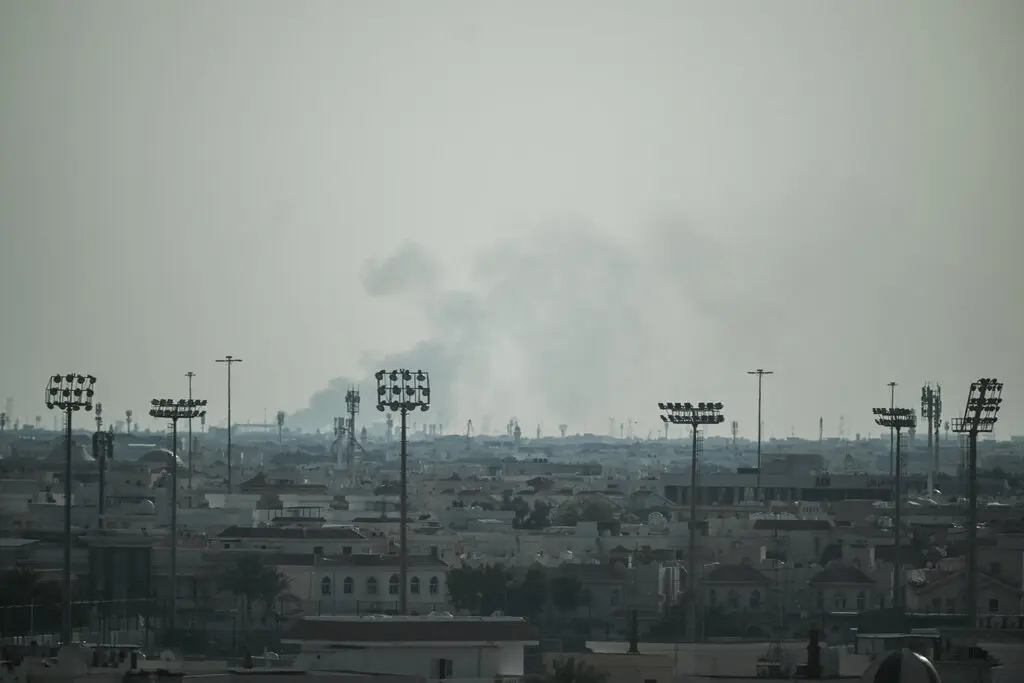
The Impact of the Conflict Between the U.S., Israel, and Iran on Qatar
On Saturday, February 28, 2026, the United States and Israel launched strikes against Iran, killing the Iranian Supreme Leader Ayatollah Ali Khamenei in his Tehran compound. Iran also reported that the head of Iran’s Revolutionary Guards Corps (IRGC) is dead. Iran retaliated with strikes against Israel and neighboring countries, including Jordan, Kuwait, Saudi Arabia, Oman, the United Arab Emirates, Bahrain, and Qatar. Iran claimed that they were only targeting U.S.-related targets, such as the Al Udeid Air Base in Qatar, but these attacks have hit key transportation hubs and civilian infrastructure as well.
Iranian Attacks Place Key Qatari Infrastructure on Hold
Qatar, like several of its fellow Gulf Cooperation Council (GCC) countries, previously expressed no desire to take sides in this war. They have a long history of serving a neutral mediating role in broader Middle Eastern conflicts. They did not attack first, nor did they permit operations to be conducted from their airspace against Iran. Nonetheless, they are suffering the consequences: as of March 3, Iran has launched 3 cruise missiles, 101 ballistic missiles, and 39 drones against Qatar, which reported a count of 16 injuries.
As a result of Iran’s retaliatory measures, Qatar shut down or paused several key aspects of the Gulf nation’s infrastructure. Authorities have closed Qatari airspace, a move echoed by seven of its neighbors. Qatar Airways suspended its flights to or from the Hamad International Airport in Doha. Similarly frozen is Qatar’s liquid gas production, run by QatarEnergy. This move reflects global energy insecurity: Iran has launched attacks on ships traveling through the Strait of Hormuz, where nearly a fifth of all global oil shipments flow. As a result, tankers are hesitant to cross the waterway, and oil prices spiked 13% on Sunday.
On a more local note, Georgetown University in Qatar decided to move operations remotely. All in-person events have been cancelled or moved online, while campus staff were instructed to work from home. Other U.S. campuses based in Qatar will operate remotely as well.
Qatar’s Response to Tehran
Diplomatically, Qatar has both reaffirmed its right to self-defense and called for the involved parties to cease escalation. According to the Qatar News Agency, HE Permanent Representative of the State of the Qatar to the UN Sheikha Alya Ahmen bin Saif al-Thani sent Qatar’s official response to the United Nations and United Nations Security Council on March 2: Iranian retaliation against Qatar “constitutes a flagrant violation of its national sovereignty, a direct infringement upon its security and territorial integrity, and an unacceptable escalation that threatens the security and stability of the region.” The message cites Qatar’s rights under UN Charter Article 51, allowing member states to defend themselves against an armed attack.
Qatar’s Ministry of Foreign Affairs expressed solidarity with the affected GCC countries. According to the Qatar News Agency, the Gulf state condemned the attacks on the U.S. embassies in Saudi Arabia and Kuwait and claimed Iran had violated international law. On March 1, the Ministerial Council of the GCC convened by videoconference to examine the impact of Iranian attacks and review options for restabilizing the Gulf. As a focal point for maritime shipping and transportation, Gulf security is critical to a functional global economy.
On March 2, Qatar’s Ministry of Defence reported that the Emiri Air Force shot down two SU24 aircraft flying from Iran. They also claimed that they have intercepted seven ballistic missiles and five drones. Aksel Zaimovic of Al Jazeera reports that Qatar has deployed fighter jets to neutralize incoming missiles over its maritime territory rather than risk more damage to civilians via falling projectile debris. On March 3, authorities arrested two IRGC cells operating on Qatari soil. Israeli sources, such as the Times of Israel, report that Qatar launched its own strikes against Iran, although Qatar has not verified this claim.
Future Ramifications of a Prolonged Conflict
Immediate concerns for the Gulf nation center on further infrastructure-based attacks, such as on the electrical or water sectors—key operations for desert countries like Qatar. Furthermore, the pause on oil production and aviation could have significant ramifications for Qatar’s economy. These issues are reflective of broader Gulf concerns: Dubai houses the busiest international airport globally, and Saudi Arabia is one of the largest oil producers in the world. If these hubs close, even temporarily, what will be the cascading effect on the rest of the globe?
Looking further downrange, a key question of this escalating conflict is what will remain in the aftermath. Beyond the issue of who will lead after Khamenei, the attack on Gulf nations has moved previously neutral countries to a more aggressive stance against Iran, and possibly closer to an alliance with Israel. Yet, Gulf countries like Qatar may also move further away from relations with the U.S. for being drawn into a war they did not start. GCC countries will likely strengthen their defense cooperation efforts to maintain the physical and economic security of the region. Given the unprecedented and unprovoked attacks on the Gulf States, Qatar and the rest of the GCC may display distinctly less tolerance for regional disruptions in the future, shifting away from neutral mediation efforts and towards more aggressive countermeasures to maintain their sense of peace and stability.
Views expressed are the author’s own and do not represent the views of GSSR, Georgetown University, or any other entity. Image Credit: The New York Times