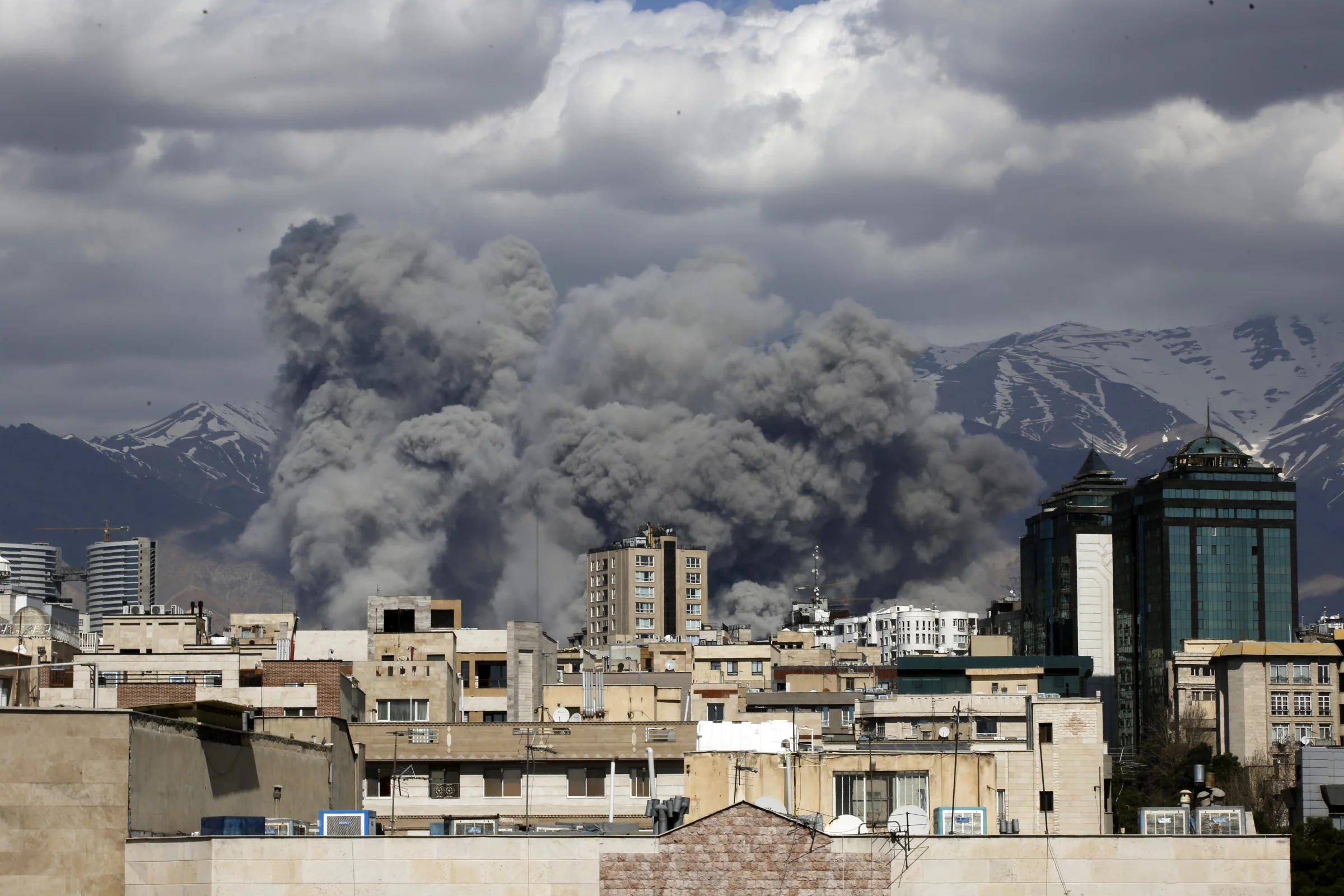
Tipping Over Lykke’s Stool: How Trump’s Iran Campaign Exposes a Flawed Theory of Victory
In the core class SEST 5001 at Georgetown University’s Security Studies Program, students examine strategy as a process, a product, and a theory, along with the characteristics of a good strategy. Senior officials in the Trump Administration would benefit from a similar education. The joint U.S.-Israeli military action launched against Iran on Saturday night, February 28, indicates that senior decision-makers lack an understanding of the core concepts that form the basis of national security decision-making.
Two Primary Approaches to Strategy
The first, known as the Lykke model, is represented by a stool. Strategy is all about how (ways) leadership will use power (means) available to the state to exercise control over sets of circumstances and geographic locations to achieve objectives (ends) that support state interests. The three legs of the stool represent those ends, ways, and means: the sum of which equals strategy. A successful strategy balances each leg of the stool so as to prevent it from tipping over. Resources must be compatible with state objectives and military capabilities; otherwise, defeat is snatched from the jaws of victory before implementation of strategy begins.
The second approach, formulated by Barry Posen and Elliot Cohen, is that strategy is a theory of victory. A strategy is a causal explanation of how a given action or set of actions will cause success. Not only must decision-makers identify the legs of Lykke’s stool, but they must also describe how and why the legs of the stool interact to further national security. Colin S. Gray reminds us that “strategy is neither policy nor armed combat, it is the bridge between them.” A strategy is only worthwhile insofar as it accomplishes the political goals of the state, as Clausewitz says that war is never an isolated act. “The political object is the goal, war is the means of reaching it, and means can never be considered in isolation from their purpose.”
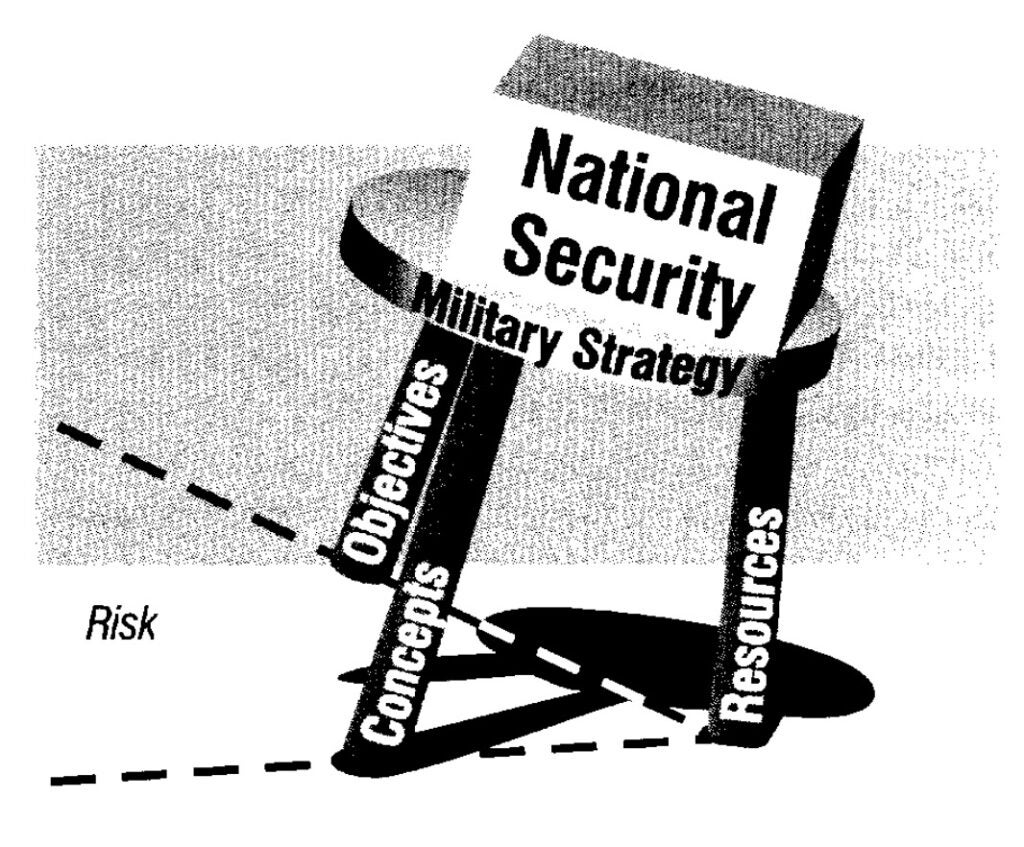
Lykke, Arthur F. “Defining Military Strategy.” Military Review 77, no. 1 (1997): 185.
What is the Endgame in Iran?
In order to analyze the United States’ strategy in Iran, it is useful to begin with the ends. President Trump stated that his objectives are to destroy Iran’s ballistic missile capabilities; annihilate the Iranian navy; prevent Iran from attaining a nuclear weapon; and end Iran’s ability to fund, arm, and direct its regional terrorist proxies such as Hezbollah and the Houthis.
Some have suggested that Trump believed the use of force would drive the Iranians back to the negotiating table after talks blew up in Geneva on Thursday, allowing the United States to extract concessions. This line of reasoning is informed by Operation Midnight Hammer in June 2025, after which Iran did not reach the height of its escalation ladder, but instead coordinated a token response with the United States. This eroded Iranian deterrence, conveying either an inability or unwillingness to inflict pain on the United States. Thus, the logic of this argument is that inflicting pain on Iran would compel it to change its behavior and accede to Trump’s demands.
However, the assassination of Ayatollah Khamenei casts doubt on the idea of a political settlement via compellence. In fact, Israeli Prime Minister Benjamin Netanyahu claims that “the aim of the operation is to put an end to the threat from the Ayatollah regime in Iran.” This suggests a more maximalist end: regime change. Such an interpretation is corroborated by statements from both Trump and Netanyahu calling on the Iranian people to “take over [their] government” and “cast off the yoke of [Iran’s] murderous regime.”
As such, there are three ways to view Operation Epic Fury. First, Trump miscalculated the Iranians’ resolve in the face of American military power and recalcitrance to disarm. Now that it is clear the Iranians have no intention of negotiating, the strategy has shifted, and Trump seeks to accomplish his goals via military might. Second, regime change was always the aim, as evidenced by the elimination of the top echelons of the Iranian regime. Not only is the Ayatollah dead, but so are the Defense Minister, Intelligence Chief, Head of the National Defense Council, and Commander in Chief of the IRGC, among others. Posturing about ballistic missiles and nuclear weapons was simply a justification to attempt to topple the regime. Third, the United States and Israel have different ends, and thus strategies. Trump preferred pursuing the aforementioned limited aims via compellence, while Israel seeks regime change. The incoherence of this scenario lies in the fact that a strategy cannot simultaneously seek coercive bargaining and regime annihilation. The former depends on the survival of the adversary, while the latter depends on his destruction. By killing the Ayatollah, Israel has arguably baited Iran into reaching for the height of its escalation ladder, precluding the possibility of negotiations and requiring the United States to pursue its aims via force alongside Israel.
Scenario three is lent credibility by Secretary of State Marco Rubio, who spoke to journalists on Capitol Hill on Monday. According to Rubio, Israel was going to attack Iran regardless of the United States’ involvement, and an Iranian retaliation against U.S. forces was expected. In order to seize the initiative and head off maximum casualties at its bases around the region, the United States pre-emptively joined Israel’s operation. The implications of this admission are staggering because it means that U.S. foreign policy and strategic flexibility have likely been constrained by Israel.
The analytic steps to take next are to consider how the United States and Israel plan to accomplish their ends and whether they possess the resources and capabilities necessary to enact that plan.
Missile Math
The U.S.-Israeli strategy depends on winning a race between the degradation of Iranian capabilities and the depletion of coalition interceptor stockpiles. Should the operation drag on for weeks or more, as Trump has signaled it may, that race increasingly inures to the benefit of the Iranians. If so, U.S. and Israeli casualties can be expected to mount. Without those interceptors, more Iranian missiles and drones will hit their targets, striking U.S. assets and forces and jeopardizing the United States’ most important resource: political will.
Each day that the conflict drags on, the United States’ missile interceptor stocks are depleted. According to estimates, during the twelve-day war with Iran in June 2025, the United States used 150 THAAD interceptors, or roughly 25% of its stock. According to the Congressional Research Service, the United States’ other key interceptor, the Patriot Missile, is also facing a shortage. Data compiled by CSIS shows that the United States purchased an annual average of 270 Patriot missiles between 2015 and 2024. However, these missile stocks are not just needed in the fight against Iran. The United States sends Patriots to Ukraine and has THAAD systems emplaced in the Asia Pacific to deter North Korea and China.
This position is where the United States’ resources run into the hard mathematical reality. Iran’s missile and drone stocks likely outnumber the United States’ interceptor stocks, and Iran’s technology is cheaper, easier, and faster to produce. Israel estimated that at the beginning of the current conflict, Iran had 2,500 ballistic missiles, not to mention thousands of kamikaze Shahed drones. In 2025, the United States acquired only twelve THAAD interceptors. The math is simple. Patriot interceptors cost roughly $3.7 million apiece, while each THAAD interceptor costs $12.7 million. In comparison, the Iranian Shahed drone costs $30,000 to 50,000 apiece, whereas Iran’s ballistic missiles cost roughly $1 to $2 million. This reality has led CSIS munitions expert, Seth Jones, to conclude that the United States will “start to feel some pain on munition stockpiles sooner rather than later.”
Concepts of a Plan: Trump’s Theory of Victory
The strategic logic of Operation Epic Fury holds that a sustained air campaign against Iran’s top leadership and critical military infrastructure will disrupt command and control, sow chaos in the ranks of the Iranian military, and so thoroughly destabilize the regime that 1) the Iranians’ capability to retaliate will be diminished, 2) their enriched uranium stockpiles and nuclear pathways will be destroyed, and 3) either the Iranian people will rise against the government or regime elements will turn on each other. This will cause the Iranians to step back, internally divided and incapable of presenting a credible threat to U.S.-Israeli interests in the region. The United States and Israel could then implement a policy of containment. As long as the operation is swift and Iran’s ability to respond in kind is significantly destroyed, U.S. missile interceptors will be able to protect U.S. assets and allies in the region.
Therein lies the problem. The Iranian regime’s governance structure is built to withstand exactly this type of pressure. As of now, the regime remains intact. Although the Supreme Leader sits atop the Iranian government, its leadership structure is horizontal, resembling independent pillars of power, rather than a pyramid. The Iranian government is not a brittle, strong-man dictatorship. In the event of the Ayatollah’s death, the constitution provides for an interim leadership council and succession, a process which is already underway. Although institutional resilience does not guarantee political cohesion, it significantly complicates assumptions of rapid regime collapse.
With respect to the military, the Iranians have adopted a doctrine known as Mosaic Defense. Rather than centralized, hierarchical command and control, authority has been decentralized, and lower-level tactical commanders are exercising autonomy. This doctrine allows the body to fight if the head is decapitated and can account for the strength of Iran’s retaliation across the region despite the elimination of top Iranian leaders. Iran has launched attacks against Cyprus, Israel, Iraq, Syria, Bahrain, Qatar, Kuwait, the UAE, Saudi Arabia, Jordan, and U.S. naval assets.
Political Will: When Democracies Go to War
One of a democracy’s most important resources in times of war is political will. With it, an administration can secure Congressional approval and utilize the military with little constraints. The public will trust its elected decision-makers, at least for a time, to prosecute the conflict and further the nation’s interests. However, without political will, the President and the party in power confront the checks and balances of democracy, risking punishment at the ballot box and censure in Congress.
Up to this point, the U.S. public and Congress have been remarkably willing to afford Trump latitude for military operations that are limited in nature, scope, duration, and risk. However, Operation Epic Fury is none of those things. This is a regional conflict. Trump says that more U.S. service members will likely die before the conflict ends. Furthermore, the administration did not sell this conflict to the U.S. public, nor did it seek prior approval from Congress. According to a Reuters/Ipsos poll taken over the weekend, 43% of Americans disapprove of the strikes against Iran, 27% approve, and 30% say they are unsure. Additionally, both the House and Senate are expected to vote on war powers resolutions this week, signalling to the President that he is on a tight leash regarding Congressional approval of Operation Epic Fury. A public that is already reticent of war with Iran is likely to turn against the President as casualties of U.S. service members—six already dead and eighteen injured—continue to mount and the conflict escalates. If the U.S. loses the missile math and escalation begets the loss of more U.S. blood and treasure, Trump will hold the blame.
Strategy: Not An Application of Force, But An Alignment of Force
In Lykke’s model, the U.S.-Israeli coalition seeks rapid regime collapse (ends) accomplished through a sustained air campaign against top Iranian leaders and critical military infrastructure (ways) using bombers, fighter jets, and naval assets without fully depleting its interceptor stocks or losing political will (means).
However, the causal logic translating these stool legs into a theory of victory is tenuous. The strategy depends on a set of optimistic assumptions: that decapitation will destabilize rather than harden the regime; that Mosaic Defense will fail under pressure; that interceptor inventories will outlast Iranian stockpiles; that regional escalation will remain contained; and that political will endures mounting casualties. If any of these assumptions prove false, the balance collapses.
More critically, the United States and Israel appear to have entered this conflict with contradictory ends. If regime change is the objective, the means required are far greater than those currently committed. If compellence and containment are the objectives, the assassination of Khamenei forces Iran to show strength, constraining its ability to negotiate. A strategy cannot coherently seek coercive leverage while simultaneously eliminating the adversary whose behavior it seeks to change.
Good strategy requires clarity about what victory means, how it is measured, and how it will be secured. Robert Pape argues that “President Trump is up against the weight of history,” noting that regime change through airpower alone has never worked in over 100 years. Neither the United States nor Israel has explained why this time is different. Lykke’s stool is wobbling, and it might just tip over.
Views expressed are the author’s own and do not represent the views of GSSR, Georgetown University, or any other entity. Image Credit: NPR