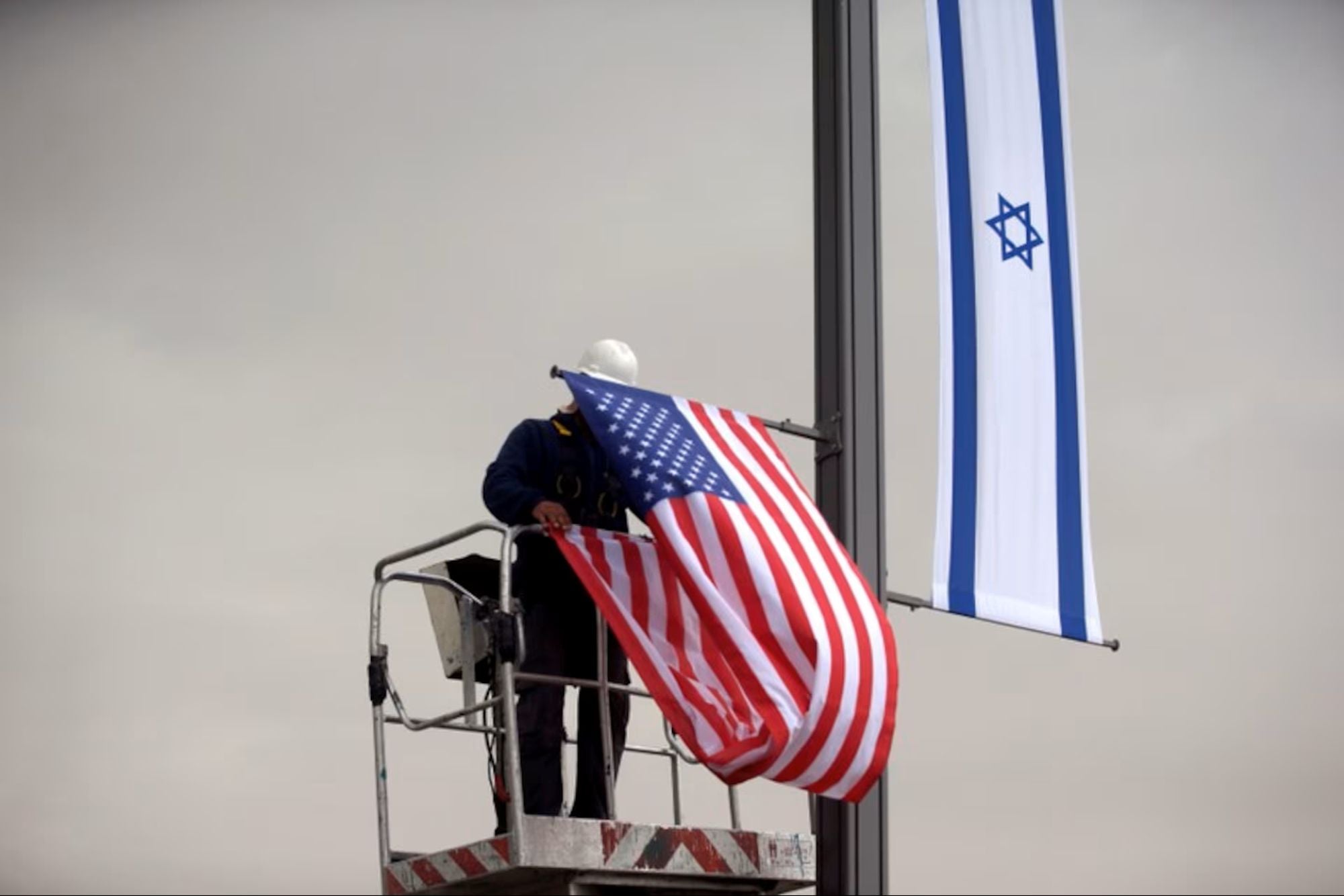
A New Dawn in the Levant: How Growing Daylight Between the Israeli Government and the American People Could Change U.S. Middle East Policy
Popular American discontent with Israel—and the subsequent weakening of the Israel Lobby— presents an opportunity to reorient U.S. policy in the Middle East and North Africa (MENA) toward U.S. strategic interests, rather than domestic political expediency and Judeo-Christian doctrine. For decades, U.S. policy in the Middle East, particularly towards Israel, has been driven as much by domestic politics as it has been by rational security concerns. Led by the American-Israel Public Affairs Committee (AIPAC), the Israel Lobby has leveraged money and domestic constituencies to pressure politicians to pursue “pro-Israel” policies. This has resulted in an unconventional bilateral relationship devoid of the material and political give-and-take of typical alliances.
However, as the American public increasingly criticizes aid to Israel and Israeli actions in Gaza, politicians’ incentives to unequivocally back Israel are waning. As the Israel Lobby’s political influence fades, the U.S.–Israel alliance may come to resemble a more conventional alliance in which both states prioritize their own security interests. American aid and arms to Israel could decrease, along with support in the United Nations Security Council (UNSC). Moreover, the U.S. government could pressure Israel to moderate its aggression against its Arab neighbors. These changes would benefit both the United States and Israel: cutting costs, stabilizing the region, encouraging Arab-Israeli normalization, and mitigating the growing anti-American and anti-Israeli sentiment around the world.
The Israel Lobby
Contrary to its name, the “Israel Lobby” is not a direct arm of the state of Israel. It is a network of American individuals and organizations, including AIPAC, the Conference of Presidents of Major Jewish Organizations (CPMJO), and Christians United for Israel, that promote “pro-Israel” policies to the U.S. government: arms and aid to Israel; refusal to condemn Israeli human rights abuses; support for the Israeli occupation of Palestinian territories; and restrictions on U.S. military sales to Arab states. While AIPAC has “unwavering support for Israel,” it does not receive funding from the state and is not registered under the Foreign Agents Registration Act. Still, its policies consistently align with the stated interests and strategies of the Israeli government, and its representatives have often coordinated with Israeli officials. As a result, the Israel Lobby straddles the line between domestic and foreign lobbying groups, occupying a political gray-zone as it works on Israel’s behalf.
The Israel Lobby is also not the “Jewish Lobby.” By appealing to Israel’s Biblical significance, the Israel Lobby has drawn considerable support from Christian Evangelicals. Moreover, not all Jewish Americans endorse the Lobby’s “pro-Israel” policies. A 2025 poll found that, in sharp contrast to AIPAC’s official stance, 32 percent of American Jews believed that the U.S. is too supportive of Israel. It also reported that 60 percent believe that Israel has committed war crimes in Gaza, while 40 percent believe that Israel has committed a genocide.
Lobbying for foreign constituencies is not illegal, and Israel is not the only state that seeks to influence U.S. politics. Governments such as China and Saudi Arabia spend millions each year to lobby Congress. Nor is Israel the only country to leverage its ethnic ties to American citizens; Greece and Armenia have famously done the same. However, Israel stands out in its efficacy. As one Foreign Service officer explained, “Every nation on earth has a right to organize and lobby our legislators and everyone else. It’s just that the Israelis did it more effectively than probably any other single nation.”
Historical anecdotes can illustrate this point: Recalling the 1960s, Ambassador Wiliam Dale alleged that President Johnson did not care about Israel’s role as a Jewish homeland or as an American ally, only as a means of mobilizing domestic support. That singular interest —“keep the Zionist lobby off my back”—reportedly drove U.S. diplomacy in Israel throughout his tenure. By the 1970s, many U.S. politicians feared that AIPAC would fund opposition candidates if they failed to pursue “pro-Israel” policies. In 1975, AIPAC circulated a letter, signed by 76 senators, that deterred the Ford administration from threatening to reduce aid to Israel. That year, Senator Charles Percy endorsed the return of Israeli occupied territories to Palestine; as a result, a staffer recalled, “all hell broke loose against him.” This trend continued in the 1980s and 1990s: criticism of Israel was suppressed in the State Department, and, as one official observed, “everybody was looking over their shoulder at the Israeli lobby.” These are only some examples of Israel Lobby’s strong influence on U.S. foreign policy since the 1960s.
America First?
The United States and Israel are both ostensibly motivated by security. For Israel, security depends on peace with its Arab states and military superiority over these neighbors. For the United States, security in the Middle East means ensuring access to trade routes and oil reserves. American strategy also depends on preventing Iranian nuclear proliferation and suppressing Islamist extremism.
Yet, the Israel Lobby has promoted foreign policies that are counter to American—and Israeli—long-term interests. Motivated by domestic politics, successive administrations have committed billions to regional causes that do not directly benefit U.S. security interests in the region. Support for Israel has historically alienated Arab states that control the majority of oil reserves and shipping routes in the region. U.S. meddling in the Middle East, often at the behest of AIPAC, has only fuelled Iran’s desire for nuclear weapons. Reticence to pressure Israel has also encouraged aggressive Israeli strategies that have undermined Arab-Israeli normalization, catalyzed conflict, destabilized the region, and provoked anti-American sentiment among Islamic terrorists. These political dynamics have led some experts, like Ambassador Marshall Wiley, to declare, “The argument that Israel is a strategic asset to the United States is essentially a rationalization for the domestic political pressures, because, in fact, they’re not an asset, they’re a liability.”
New Political Mutiny
The Israel Lobby continues to shape U.S. politics today, but its influence may be waning. In 2024, AIPAC spent $15 million in ads attacking Democratic Rep. Jamaal Bowman, a critic of Israeli actions in Palestine. That same year, it spent $400,000 trying to unseat Republican Rep. Thomas Massie after he publicly opposed aid to Israel. However, changes in popular opinion are revealing the limits of AIPAC’s influence on American politics. According to a 2025 Pew Research report, Americans are increasingly critical of the Israeli government and its policies in Palestine. Over half of Americans polled viewed the Israeli government unfavorably, as opposed to 43% in 2022, and 39% believed that its military operations in Gaza were excessive, an increase from 27% in 2023. Just 30% of respondents approved of Trump’s Israel policy, while many believed he was too supportive of the country.
U.S. politicians have taken these popular shifts into account. Multiple Democratic politicians have recently refused to accept donations from AIPAC and have worked to reduce weapons sales to Israel. In November, New York elected Zohran Mamdani, who has accused Israel of committing a genocide in Palestine. Rep. Ritchie Torres faces a primary challenge from Michael Blake, who has alleged, “Ritchie will only focus on AIPAC.” On the Republican side, Rep. Marjorie Taylor Greene has referred to Israeli actions in Gaza as a “genocide.” Meanwhile, political commentator Tucker Carlson recently criticized U.S. support for Israel, and Candice Owens said of Trump’s Israel policy: “I see so much hypocrisy in terms of when we say, ‘America First.’…you cannot pretend that that’s not because AIPAC spends $100 million in our elections.”
Americans seem to be growing increasingly skeptical of Israel and its lobbyists. Some of this hostility is certainly rooted in anti-Semitism and stoked by anti-Semitic influencers like Candice Owens and Nick Fuentes. While conspiracy theorists might claim that the Israel Lobby is powerful because it represents a global cabal of Jews; this is both anti-Semitic and demonstrably untrue—it is powerful because it effectively mobilizes voters and donors. Yet many critiques of Israel and AIPAC are made in good faith. They are rooted in Americans’ legitimate uneasiness with the billions of tax dollars sent to Israel, its oppression of Palestinians, and the opaque, outsized role of money in U.S. politics. Writing off all of these concerns as anti-Semitic would be both unfair and inaccurate.
United They Stand
The American-Israeli alliance will not vanish. While Israel has at times acted as a liability, security cooperation continues to be in both countries’ material interest. Israel provides a regional foothold out of which U.S. military and intelligence assets can operate. The National Security Agency and the Central Intelligence Agency benefit from relationships with Israel’s Mossad and SIGINT National Unit, which share intelligence on “strategic threats to U.S. and Israeli interests,” including Iranian nuclear development, Syrian weapons programs, and “Global Jihad.” Israeli actions against Hamas and Hezbollah also align with the U.S. priority of stifling extremism and countering Iranian proxies. From a realist perspective, there is much to be gained.
There are also bureaucratic and legal barriers to weakening the U.S.-Israel alliance. The United States legally considers Israel a Major Non-NATO Ally, and it signed defense cooperation agreements with Israel in 1952, 1982, 1991, and 1994. In 2008, Congress passed a law that mandated that the United States maintain Israel’s qualitative military edge (QME) “over military threats to Israel,” effectively limiting arms sales to Arab states. This legislation was backed by strong pressure from the Israel Lobby. The United States-Israel Strategic Partnership Act of 2014, also promoted by AIPAC, reiterated these commitments. The U.S. and Israel also have a memorandum of understanding that has routinized annual transfers of $4 billion in military aid to the latter state.
What’s to Come is Still Unsure
While the U.S.-Israeli alliance will not break, it may soften. If “pro-Palestine” political momentum endures and AIPAC’s power dwindles, the fear of critiquing Israel could diminish among politicians and civil servants. This broadening of what is considered acceptable discourse in Washington could change policy on the margins. There are already signs of such a shift. Trump has moved to decenter Israel in Gaza humanitarian efforts and pressured Netanyahu to adopt his ceasefire plan. The president’s willingness to sell F-35s, advanced GPUs, and nuclear technology to Saudi Arabia represents a disregard for Israel’s QME. Meanwhile, Democrats have pushed to limit the scope of U.S.-Israel intelligence sharing.
If support for Israel and its lobbyists does dim, the United States’ unequivocal defense of Israel in the UN may cease. U.S. ambassadors to the UN have historically worked to block or modify UNSC resolutions believed to be critical of Israel. Since the war in Gaza began, the U.S. has vetoed six ceasefire resolutions at AIPAC’s behest, arguing that they did not adequately condemn Hamas. In 2023, the U.S. nearly blocked a resolution to deliver aid to Gazans for similar reasons. Yet, as support for Gaza has surged, Trump’s recent UNSC ceasefire resolution represents a prospective, though slight, shift in this pattern. In the future, American ambassadors may choose to abstain from, rather than veto, UNSC calls for a ceasefire and condemnations of Israel.
Qualified, as opposed to unconditional, U.S. support for Israel could paradoxically improve Israeli security. The United States is the only country with the leverage to compel Israeli military restraint. When the U.S. has declined to exert this influence, ceasefires and negotiations have failed: Israel has habitually violated its 2024 ceasefire with Hezbollah. In March 2025, a ceasefire with Hamas collapsed as Israel resumed airstrikes on Gaza. The recent October ceasefire is already disintegrating, as Israel continues to bomb the territory. While a ceasefire would offer stability and reduce strains on military forces, Israel seems unwilling to get there without American prodding. The White House must be willing to leverage aid to Israel, and the domestic costs of doing so appear to be decreasing.
Continued Arab-Israeli normalization also necessitates U.S. pressure on Israel. Since their signings, the Camp David Accords with Egypt and the Israel–Jordan Peace Treaty have enhanced Israeli security by decreasing tensions and increasing economic ties. Similarly, the 2020 Abraham Accords initiated diplomatic relations between Israel, Bahrain, Morocco, and the UAE. This resulted in security cooperation on Iran and economic gains for Israel. However, recent Israeli aggression has jeopardized this rapprochement and the possibility of future gains. Its actions in Palestine have undermined negotiations with Saudi Arabia and endangered its agreement with the United Arab Emirates (UAE). With fewer domestic constraints, the United States could pressure Israel to moderate its security policies to rehabilitate Arab-Israeli rapprochement; this would allow the U.S. to unify its MENA allies around the shared threats of Iran and Islamic extremism.
These individual policy changes could culminate in a broader regional realignment as the U.S. edges closer to the Gulf states, something that has been historically prevented by tensions between Israel and the Gulf. Trump has flaunted his personal affinity for these autocracies. In a recent White House visit, Trump praised the Saudi crown prince and encouraged military sales to the country. In the spring of 2025, Qatar gifted the administration a luxury Boeing 747, which Trump readily accepted. The president and his family also have strong financial ties with the UAE, Qatar, and Saudi Arabia. Yet, this diplomatic drift is not solely a product of Trump. Gulf states possess extensive oil reserves, which American administrations have long coveted, and their geography makes them valuable partners in U.S. efforts to secure trade routes, counter Iran, and suppress Islamic extremism. Less domestic support for Israel could thus mean more support for the Gulf states.
From the River to the Pacific
A decoupling of Israel and the United States would facilitate the long overdue “Pivot to Asia.” The trauma of 9/11 has faded in the public imagination, and support for the War on Terror with it. Meanwhile, the long wars in Iraq and Afghanistan have instilled a contempt in many Americans for involvement in the region. While there are industrial barriers to energy self-sufficiency, the United States has become a net oil exporter, indicating that its dependence on the Gulf may wane in the long-term. Though Iran remains hostile, Chinese regional hegemony is a far greater threat. American preoccupation with the Middle East is becoming harder to justify as China grows stronger, and the U.S.–Israel alliance seems to be one of the factors preventing this pivot. Detachment from Israel would allow the U.S. to recommit attention and resources to the coming conflict with China.
As American power wanes in relation to China, the United States’ ability to counter it will depend on multilateral cooperation. An offshore balancing strategy requires collaboration with regional allies. Export controls and economic decoupling from China also necessitate international coordination. These partnerships are partially based on U.S. legitimacy as a responsible, liberal hegemon: one that works through institutions, discourages the use of force, defends human rights, and accommodates weaker states. The United States must convince partners why they will be better off with the U.S. than China; part of this appeal is its liberal values. Furthermore, if the U.S. does intervene in a Taiwan contingency, its ability to rally allies will depend on the perception that it is fighting for something greater than imperial interests.
However, buttressed by the Israel Lobby, the United States’ unequivocal support of Israel has undermined this legitimacy. Support for the destruction in Gaza discredits its alleged allegiance to peace and democracy. Its abuse of UNSC veto power in defense of Israel has undermined the very international institutions it pretends to represent. The rules-based emperor has no clothes, and its rivals have seized on this naked hypocrisy. If the U.S. wants to counter Chinese revisionism, it must convince allies that its global vision is a goal worth fighting for, and standing up for human rights presents a chance to claw some of its legitimacy back.
Conclusion
Unconditional support for Israel—or any country—was never good policy, and it is now ceasing to be good politics. The political moment presents an opportunity to revise American strategy. As public support for Israel decreases and the strength of the Israel Lobby diminishes, politicians face fewer consequences for opposing “pro-Israel” policies. The United States could seize on this political capital to bridle Israeli aggression: leverage aid to Israel, facilitate ceasefire resolutions, and push for Arab-Israeli normalization. Breaking with Israel would help rehabilitate soft power abroad while allowing America to focus on China. Though the U.S. is unlikely to endorse a two-state solution or end the American-Israeli alliance, it could begin to treat Israel not as a paragon, but as a partner worthy of disagreement.
Views expressed are the author’s own and do not represent the views of GSSR, Georgetown University, or any other entity. Image Credit: Reuters