Syria After Assad: A Nation on Edge
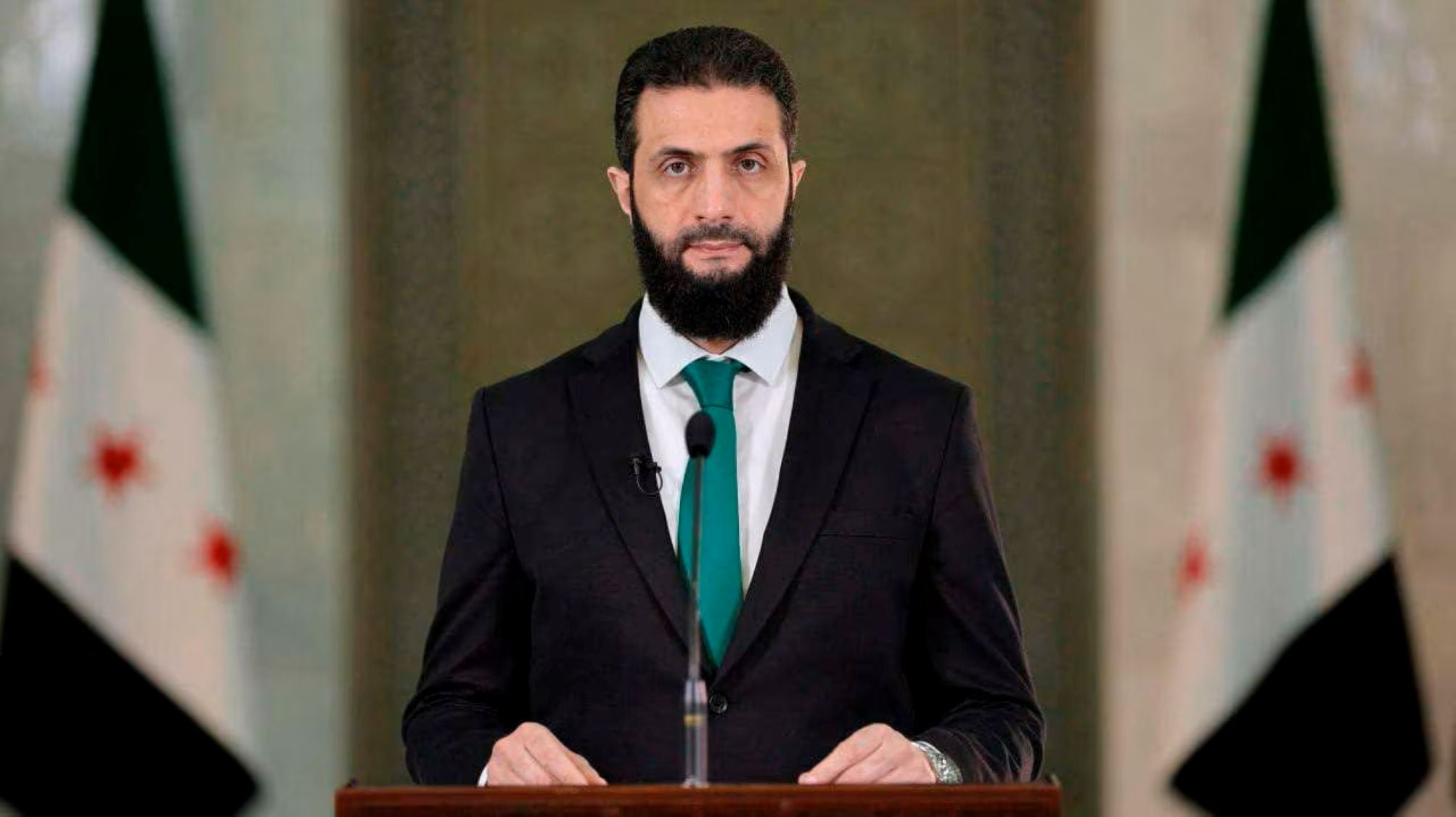
Known formerly by his nom de guerre, Abu Mohammad al-Jolani, militant-turned-statesman Ahmed al-Sharaa now presides over a fractured Syria struggling to define its future. His ascent from the leadership of Hayat Tahrir al-Sham (HTS) to Syrian head of state has sparked intense scrutiny due to his past ties to al-Qaeda and the Islamic State (IS). The tumultuous past has raised international and domestic fears that Syria, having just ousted one authoritarian regime, is facing another—merely replacing a Shia autocrat with a Sunni one. However, al-Sharaa has sought to assuage these concerns and rebrand himself as a pragmatic statesman seeking international legitimacy.
In the roughly one year since his swift takeover of the Assad regime, al-Sharaa has put forth grandiose visions for a future Syria with aspirational liberal rhetoric and promises. Becoming the first Syrian head of state in six decades to address the United Nations General Assembly, al-Sharaa took the podium to share an optimistic vision of a new Syria—pledging to transform the once-repressive nation into a haven of diplomacy, stability, and equal rights for its people. Whether this vision can become more than just aspirational rhetoric will depend on al-Sharaa’s ability to confront the two forces that now define Syria’s future: deepening sectarian fragmentation and the resurgence of IS.
The new government’s survival depends on consolidating authority over Syria’s fractured sociopolitical landscape, especially autonomy-seeking Kurds in northeast Syria. Meanwhile, the deep internal fissures and persistent instability have fueled a resurgence of IS, which seeks to exploit the turmoil to undermine the government’s legitimacy and plunge the nation back into the cycle of violence that defined the past decade.
The Battle Within: Syria’s Internal Fractures
Beneath al-Sharaa’s rhetoric lies a deeply fragmented sociocultural fabric. Persistent sectarian violence reveals the fragility of al-Sharaa’s promises and epitomizes Syria’s broader legitimacy crisis. In July 2025, clashes between Syria’s Bedouin and Druze communities escalated into full-scale violence that resulted in over 1,000 deaths, with half identified as Druze civilians by the United Nations. Government forces deployed to restore order were captured on video taking the side of the Bedouin tribes against the Druze factions; in some cases, they burned civilian houses and forced Druze men to shave their mustaches in acts of humiliation. Al-Sharaa’s promises of democracy and equality have failed, thus far, to be realized by his government’s actions. Al-Sharaa’s failure to reconcile Syria’s minority groups has been met with Druze calls for independence and demands for constitutional revisions that would guarantee ethnic minority rights. The assault on the Druze population is not an isolated incident, but a microcosm of the broader sectarian tension plaguing Syria.
Recent attacks on Syria’s Alawite community underscore the deep sectarian wounds that continue to divide the country. Decades of Alawite rule under the Assad regime have made Syria’s Alawite community a central target for grievance-driven reprisals due to historical ties to the regime. Following a failed uprising by Assad loyalists that left several government forces dead, militant groups with ties to the government launched a retaliatory attack on Syria’s Alawite communities, killing an estimated 1,500 Alawites in the massacre. The escalation of ethnic violence and revenge killings characterizes the deep fissures and long-standing grievances that al-Sharaa’s government must address. Should the government ignore these clear warning signs, the same ethnic marginalization and plutocratic factors that catalyzed the Syrian Civil War will be left to permeate through a fractured population, threatening both the government and Syria’s chance to depart from its legacy of civil strife.
A continued lack of response to sectarian violence threatens to fracture an already delicate relationship between the government and the Syrian Democratic Forces (SDF), which controls Syria’s northeast and embodies the Kurdish autonomy and rights movement in Syria. The government’s survival relies on successful cooperation with the SDF, first brokered in a deal between the two in March. The agreement stipulates SDF forces’ integration into the Syrian army, the transfer of SDF-held territory in the northeast to government control, and legal recognition of Kurdish rights. Without a monopoly of force to secure its authority, al-Sharaa’s government risks resorting to violence to extend the government’s geographic control and remove the SDF, a potential military rival, from Syrian territory. Such a move would deepen internal divisions and further erode the already limited legitimacy the government holds among Syria’s minority communities. For many of these groups, the government’s relationship with the SDF serves as a litmus test of the regime’s good faith; renewed conflict would convince them otherwise.
Regional involvement has further complicated the relationship between Damascus and the SDF. Turkey has long held that any establishment of a Kurdish autonomous territory on the border would constitute an existential national security threat. Ankara has threatened offensive military action against the SDF unless the integration agreement is implemented in full, pressure Damascus has leveraged to accelerate negotiations. Yet the question of minority rights in Syria extends beyond the Kurds. Israel’s continued occupation of the Golan Heights adds another layer of regional tension, with Tel Aviv supporting greater autonomy for the Druze following the July violence in southern Syria. However, these discussions with Israel remain siloed from Kurdish negotiations, reflecting how Damascus is selectively managing minority demands through bilateral arrangements rather than a unified national framework.
Yet despite the overlapping external pressures, the implementation of the SDF integration agreement remains the most consequential test of whether the new government can confront the complex, existential threats facing Syria. The formal recognition of rights would ease Kurdish skepticism regarding their treatment under the new regime, especially in the wake of the U.S. military withdrawal, which had acted as their protector in the region. More broadly, guarantees of Kurdish rights would signal to other ethnic groups that the new leadership is capable of inclusive governance. In addition to domestic appeasement, the execution of the agreement would recognize the government’s authority over the northeast territory while peacefully integrating the SDF, Syria’s largest military force, into government forces. Yet progress has stalled.
Surges in sectarian violence have eroded the SDF’s trust in al-Sharaa’s willingness to protect the Kurdish population, the SDF’s greatest concern. Recent dialogue between the two groups suggests a deteriorating relationship, as al-Sharaa publicly walked back his commitment to recognizing broad Kurdish rights. A collapse of the partnership would dissolve any hope for a peaceful unification and likely reignite widespread conflict. These are not baseless concerns; just days after Syria held its first post-Assad elections, violence erupted in Aleppo as HTS and SDF forces clashed in one of the most serious escalations since HTS took power.
A Familiar Threat: The Resurgence of the Islamic State
Aside from the delicate internal dynamics, the backdrop of instability has fueled the resurgence of IS, which seeks to capitalize on existing social divides and risks perpetuating violence in Syria. While the group no longer maintains the territory or manpower possessed at its peak in 2014, its playbook remains centered on exploiting Syria’s vulnerabilities to regain an operational base in Syria and Iraq. Syria’s persistent cycle of violence and prolonged absence of centralized authority have made the country an attractive haven for IS, allowing it to operate with relative autonomy. Furthermore, IS’s meticulous ability to leverage socio-political grievances for recruitment has turned Syria into a ripe ground for attracting disenfranchised fighters and civilians to the group. The IS threat, though far from new in Syria, now reemerges as the new government struggles to legitimize its authority.
IS has adapted its strategy to the post-Assad landscape, shifting from territorial control to targeted attacks designed to exploit fear and undermine public confidence in al-Sharaa’s government. In January, government forces thwarted an IS plot to detonate a bomb at a Shiite shrine in the Damascus suburb of Sayyida Zeniab. The attack, though unsuccessful, underscores IS’s intent to inflame sectarian tensions and challenge al-Sharaa’s security reassurances. In May, IS detonated a car bomb at a military checkpoint, killing several government soldiers. The attack demonstrated both the group’s continued operational capability and the permeability of the government’s security apparatus. These attacks were not a coincidence. Striking within government-held territory just weeks after the Alawite massacre, IS sought to amplify public outrage over the bloodshed and increase doubts about al-Sharaa’s ability to maintain order. Each attack, though limited in scale, reinforces the perception that Syrians remain vulnerable to both domestic repression and extremist violence.
While attacks within government-controlled territory have been limited, IS’s activity in Syria’s northeast suggests a broader effort to regroup. Since Assad’s fall, IS has launched more than 150 attacks on the SDF, a notable uptick following a lull at the end of 2024. IS has also repeatedly targeted SDF-run prisons that hold an estimated 10,000 IS fighters in efforts to increase manpower. If IS succeeds in sustaining its resurgence, Syrians—particularly ethnic and religious minorities—will likely further question the government’s capacity to ensure safety. Already under fire for failing to curb Syria’s sectarian violence, al-Sharaa’s regime cannot risk losing its legitimacy as Syria’s security guarantor. Continued IS attacks would signal to the SDF that the government cannot protect its own citizens, raising doubts on whether to transfer Kurdish security forces into the government. As the SDF remains the primary force combating IS, any renewed conflict with the government would risk the SDF reallocating depleted forces towards Damascus, thus providing IS a free hand to regroup.
Over a decade has passed since IS’s peak, yet Syria has not escaped from IS’s shadow. The resurgence of IS is not divorced from Syria’s political fragmentation but rather enabled by it. The same sectarian divides that threaten to undermine al-Sharaa’s legitimacy also create fertile ground for IS to cultivate grievances and exploit them for recruitment, propaganda, and operational reach. By targeting vulnerable communities, IS leverages unresolved sociopolitical fissures not only to erode confidence in al-Sharaa’s “Syrian vision” but in the government’s ability to protect all Syrians, regardless of their political affiliation or social identity. In the face of a revived IS insurgency, al-Sharaa will be tested on whether he possesses the capacity to govern and reestablish security, or whether Syria will once again fall prey to IS’s entrenchment.
The Road Ahead: Prospects for a New Syria
Syria’s trajectory under the new government is uncertain. While the Syrian Civil War finally reached its fourteen-year conclusion, deep sectarian divides, regional instability, and external threats like IS threaten to return the country to conflict. It is not a question of how the al-Sharaa government will reconcile sectarian divides and unify the nation under one government, but rather whether the al-Sharaa regime is willing to take the necessary action to deliver on the promises made to the United Nations—the creation of a new Syria based on diplomacy, stability, and equal rights. While the recent elections signaled a positive step away from authoritarianism, the results raised concerns about the rise of a Sunni nationalist government.
The election results heavily favored Syria’s Sunni majority, many of whom fought alongside HTS against the Assad regime, with less than a dozen of the 119 seats elected representing Syria’s ethnic minority groups. While the al-Sharaa government did not formally ban these groups, it effectively excluded much of the Kurdish and Druze populations, who reside in the northeastern and southern regions of Syria, respectively. Al-Sharaa’s lack of territorial control in Syria’s northeastern region, which remains under SDF rule, and southern areas, split between government, Druze, and Israeli control, leaves both communities without political representation in the new government. The government has, however, barred all political activity by Assad-linked groups, an act that draws concerning parallels to the U.S. “de-Ba’athification” policy after the overthrow of Iraq’s Saddam Hussein and risks entrenching division rather than fostering reconciliation.
Despite these challenges, the new government now has an opportunity to begin rebuilding the social and political structures decimated by the civil war, drawing on the failures of the previous regime as a cautionary guide. Syria’s ethnoreligious diversity remains a defining feature of its political landscape, and any governance model will require acknowledging, not suppressing, this reality. The integration agreement with the SDF offers one possible starting point for rebuilding trust across communities, demonstrating that Damascus is willing to pursue inclusive frameworks. Incremental reforms that expand political participation and legal protections to all Syrians would signal to both domestic and international audiences that Syria’s transition is more than rhetorical. Such progress could lead to the easing of economic restrictions and provide a pathway for reconstruction and economic recovery to the numerous cities that remain in ruins.
The government’s fate is tied to its ruler, al-Sharaa, and his ability to rebuild a nation destroyed by the Assad-era repression. For al-Sharaa’s vision to become more than performative rhetoric, he must address the two central challenges to Syria’s stability: deepening sectarian fragmentation and the resurgence of IS. Should al-Sharaa fail, it will raise difficult questions among the international community about the extent to which they can support a leader who backtracks on his promises. One thing is for sure: the Syrian people did not fight for over a decade only to be replaced by another authoritarian strongman, and they will not settle for it.
Views expressed are the author’s own and do not represent the views of GSSR, Georgetown University, or any other entity. Image Credit: Reuters
