A Central Asian Solution? Implications of a New Afghanistan Contact Group
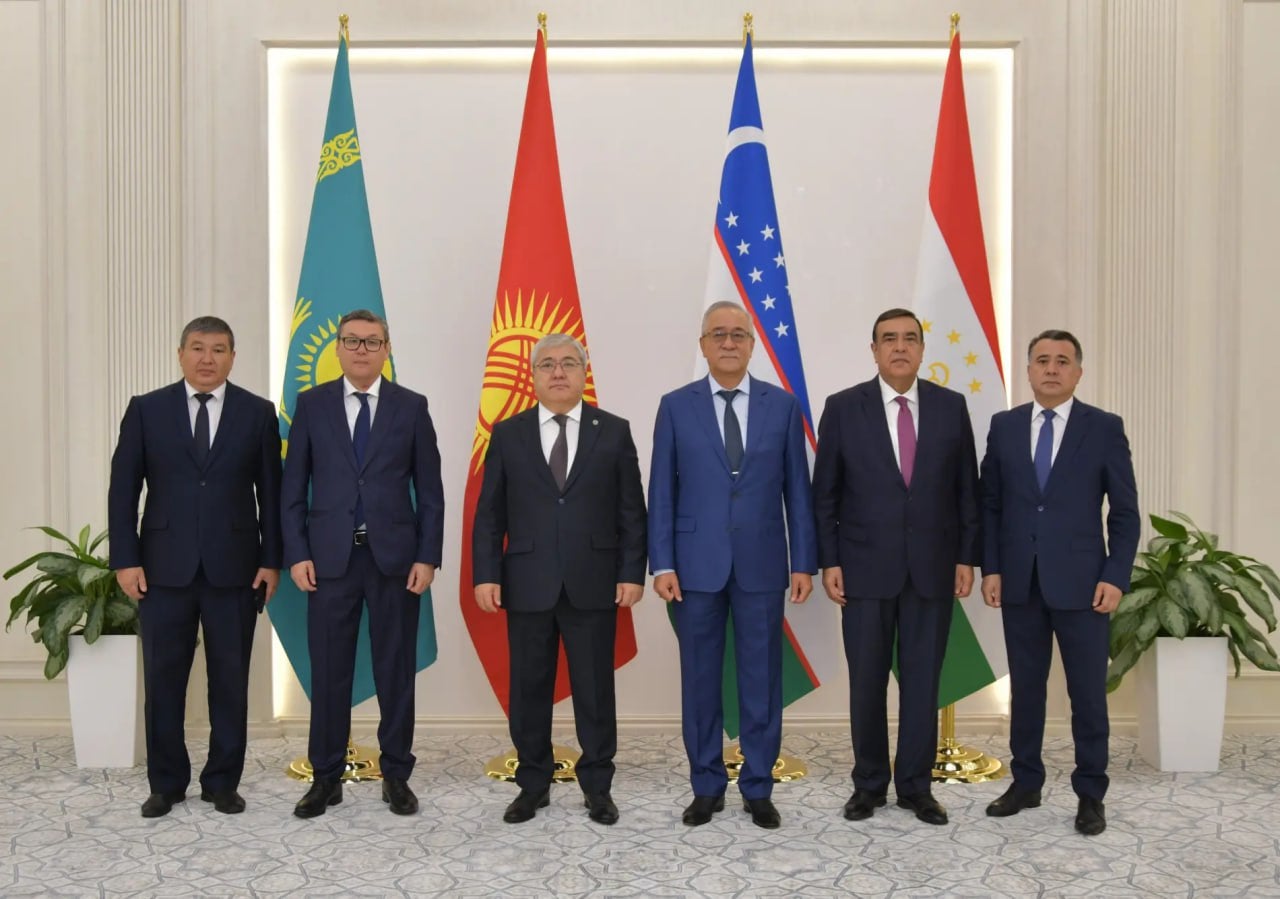
On August 26, 2025, special representatives from Kazakhstan, Kyrgyzstan, Tajikistan, and Uzbekistan gathered in Tashkent to establish a new Afghanistan Contact Group. While the formation of yet another regional diplomatic mechanism largely flew under the radar, this group represents the first Central Asian engagement with Afghanistan that yielded an institutional platform without the participation of external powers—most notably, the People’s Republic of China (PRC) and Russia. This desire for an independent approach signals a real shift in how Central Asia approaches regional security and economic cooperation, reflecting growing concerns about PRC influence and a desire to forge a Central Asian regional security community moving forward.
Afghanistan has long been subject to competing external interests, with previous regional coordination efforts consistently shaped by great power involvement. The Six Plus Two Group, active from 1997 to 2001, brought together Afghanistan’s six neighbors—including the PRC—with the United States and Russia under the United Nations’ umbrella. This format emerged during the Taliban’s first period in power in order to work toward political reconciliation and regional stability. Notably, it marked the first time since the Iranian Revolution that U.S. and Iranian officials sat at the same table, even if only for indirect talks. Following the U.S. invasion of Afghanistan, the PRC-led Shanghai Cooperation Organization established the SCO-Afghanistan Contact Group in 2005. Though suspended in 2009, it revived in 2017 and continues to meet periodically. The PRC has used this format to secure its interests, such as its Belt and Road Initiative (BRI) and China-Pakistan Economic Corridor.
The newly established Afghanistan Contact Group breaks this pattern of external mediation. This group is the first Afghanistan-Central Asia institutional mechanism established through in-region states’ consensus alone. . Russia’s formal recognition of the Taliban government in July 2025 appears to have galvanized Central Asian states to take coordinated action to secure their own backyard, rather than simply aligning with two great powers’ preferences. Initiated by Uzbekistan, the contact group positions itself as a platform for Central Asian states to “strengthen the independent and responsible role” in shaping the regional agenda on Afghanistan. This language of independence pervades official statements. Unlike previous formats dominated by competing great power interests, the group prioritizes Central Asian self-sufficiency and strength: “whatever is done for Afghanistan is, in fact, done for oneself.” In other words, formalizing trade and transit with Afghanistan, continued supplying electricity and food, and maintained working contacts with the Taliban, are not charity, but security for Central Asia.
The PRC’s exclusion from this new mechanism must be understood against the backdrop of the PRC’s dramatically expanding influence in Central Asia. Xi Jinping introduced the BRI in Kazakhstan in 2013, and has since systematically worked to align Central Asian national development strategies with the PRC’s Five-Year Plans. Through the BRI, Central Asia has been a focal point of Chinese infrastructure investment, receiving an unusually high concentration of funding in recent years. In the first half of 2025 alone, Kazakhstan received $23 billion in Chinese investment. The PRC’s BRI engagement in Central Asia reached a total $24.3 billion, making Central Asia the region with the highest absolute investment volume from the PRC globally. The PRC’s infrastructure investments, from energy to metals and mining, come with influence. Countries like Tajikistan and Kyrgyzstan are deeply reliant on the PRC, with contracts often backed by mineral rights or critical infrastructure, and plagued by corruption scandals tied to PRC-funded projects.
Despite these power asymmetries, the Central Asian states’ announcement signals that, on matters of immediate regional security and economic integration with their southern neighbor, they will chart their own course. First, Central Asia shares a 1,300-mile border with Afghanistan and faces direct security threats from extremist groups, drug trafficking, and potential refugee flows. The Central Asian states live with the daily consequences of instability in Kabul. Second, economic opportunities in Afghanistan—from electricity exports to participation in trans-Afghan trade corridors connecting Central Asia to Pakistani ports—are critical for economic diversification and reduced dependence on traditional routes through Russia and the PRC. Third, there is growing awareness of vulnerabilities to the PRC: debt sustainability, loss of economic sovereignty, and political influence. For example, in October 2024, Kazakhstan declined to join BRICS to maintain “neutrality” despite pressure from the PRC and Russia and immediate economic retaliation on agricultural imports.
The new contact group allows Central Asian states to formalize and increase coordination on Afghanistan issues without being restricted to the context of the PRC’s strategic priorities. The contact group is envisioned as a permanent platform with regular meetings. If successful, the group could evolve into a sustainable five Central Asian states plus Afghanistan (C5+A) format that aims to integrate Afghanistan into regional frameworks not as a problem to be managed, but as a partner in discussions about water, security, logistics, and the environment. Perhaps most importantly, in the long run, the contact group aims to create a stronger and more unified representation of the Central Asian countries in international fora such as the United Nations and other five Central Asian States plus another country (C5+1) formats. Articulation a common regional position on Afghanistan in formats such as the Shanghai Cooperation Organization with the PRC, the United Nations, or the C5+1 with the United States will both increase the region’s foreign policy influence and give Central Asia a more diplomatic leverage at the table with major powers.
Although the PRC’s exclusion is not necessarily a rejection but rather an attempt to manage relationships independently, this development could present a diplomatic headache for the PRC. Given the PRC’s investments in Central Asia, an independent Central Asian bloc capable of coordinating positions on Afghanistan—and potentially other issues—risks complicating the PRC’s efforts to secure bilateral deals and leverage countries’ dependence on PRC investment. As the PRC’s footprint in Central Asia grows larger, the Central Asian states are demonstrating that they can cooperate independently when their core interests are at stake.
The new Afghanistan contact group—more than a mere consultative platform—represents a strategic reshaping of the region’s security architecture. If this announcement is followed up with regular high-level meetings, joint action plans on strategic sectors, and even a coordinated security agenda, the platform is likely to enhance Central Asian states’ policy autonomy beyond Beijing and Moscow. Whether this nascent model of independence proves sustainable and expands to other regions and policy issues will be a key geopolitical question to track in the coming years. For the United States, Central Asia’s step toward geopolitical independence is an opportunity to watch and adapt. Rather than frame this development as anti-PRC coalition building or demand Central Asian alignment, the United States should support this effort in good faith and deliver on commitments made through the C5+1 format, especially ahead of its tenth anniversary.
For now, the message is clear: Central Asia is no longer content to be a theater for great power competition. It is becoming a player in its own right.
Views expressed are the author’s own and do not represent the views of GSSR, Georgetown University, or any other entity. Image Credit: Kun.Uz