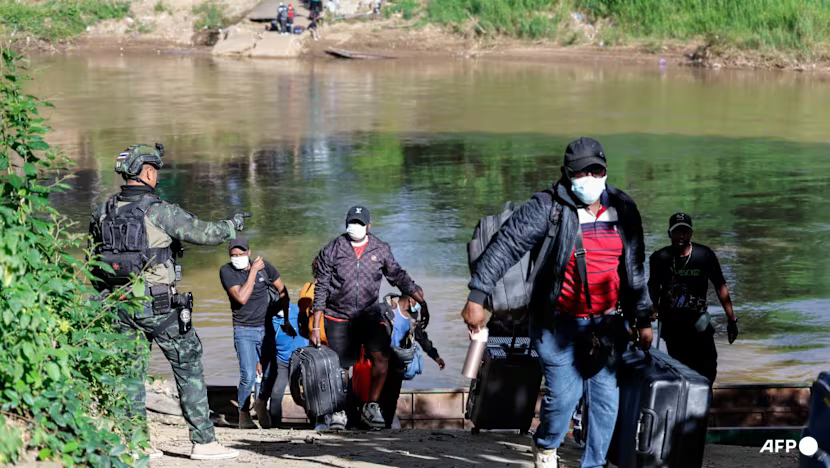
The Human Cost of a Digital Crime Boom in Southeast Asia
On October 14, the United States officially designated an online scam network based in Cambodia as a transnational criminal organization, imposing sweeping sanctions on over 100 targets throughout the organization. The United States’ recent sanctions against Cambodian scam networks not only address the financial threat posed by transnational cybercrime, but also open new paths for tackling the interconnected crisis of human trafficking in Southeast Asia.
Scam farms, or fraud factories, have rapidly proliferated since 2020, when the COVID-19 pandemic slowed or halted profits for hotels, casinos, and private businesses across the region. The spaces that formerly housed these businesses, many with alleged ties to the People’s Republic of China’s (PRC) Belt and Road Initiative, have been repurposed across Cambodia, Myanmar, Laos, and the Philippines, as well as in other parts of Southeast Asia, as centers for online fraud activity.
Scam farms pose a massive problem for the United States, costing American citizens billions of dollars each year and severely undermining online security. Yet, the crisis goes even deeper, as fraud factories rely heavily on human trafficking for scamming labor. Altogether, scam farms across Southeast Asia present a humanitarian transnational crime crisis with global implications.
Scale of Scam Farms
Scam compounds generate astounding profits, and the numbers have only swelled in recent years. The Treasury Department estimates that U.S. citizens have lost $16.6 billion to scammers. According to a Pew Research study, nearly three-quarters of adults in the United States have experienced an online scam or attack. Scams persist across age and income demographics and range from the financial fraud of seniors to the sextortion of minors.
Scammers employ many methods to lure victims, including fraudulent investment opportunities, impersonation of loved ones, e-commerce scams, cryptocurrency manipulation, extortion, and various kinds of cyberattacks. Known as “pig-butchering,” these scams hinge on gaining a victim’s trust, slowly “fattening” them with affection or false promises, before stripping them of their savings.
Scamming crime networks victimize both those who fall for the scams and many scam workers themselves, who often are innocent people trafficked by crime networks to labor in fraud factories.
Though human trafficking networks are difficult to accurately quantify, the United Nations has estimated that transnational scam networks enslave over 220,000 individuals from more than 60 countries. In data from 2018, the International Monetary Fund estimates that around 25 million victims of human trafficking are based in the Asia-Pacific region, accounting for around two-thirds of the world’s trafficking victims.
Crime networks usually attract victims through online job advertisement campaigns that appear legitimate. Then, traffickers transport victims to scam farms, where they are held against their will and forced to work long hours and meet demanding scam quotas. Scam bosses extort victims through debt bondage, physical abuse, verbal threats, and sexual exploitation. Some survivors have reported instances of torture and rape. Survivors have reported terrifying conditions; compound leaders forced trafficked women to stream sex acts online, beat young victims when they failed to meet quotas or refused to work, and forced victims to work over eighteen hours each day.
Chances of escape are complicated by the murky connections between criminal scam networks and regional governments.
Crime Networks and Governmental Responsibility
Scam farms can be difficult to identify because compounds are often built from formerly legitimate, registered businesses. Sophisticated dormitories, cafeterias, and office buildings bear a striking resemblance to those of a well-established tech company. Trafficking victims do not tend to leave scam farms— the compounds are designed to be self-sustaining, thereby avoiding raising suspicion with local authorities. The criminal networks are often connected to local power structures, which allow them to dodge scrutiny from local law enforcement.
For example, rebel militias control significant territory along Myanmar’s border with Thailand and Laos. In May, the United States sanctioned the Karen National Army (KNA), a Burmese militia, for facilitating cyber scams through human trafficking and cross-border smuggling. Policy groups have found that the military junta currently ruling Myanmar not only permits but also facilitates scam projects, coordinating with a variety of malicious actors to fuel its military operations. Militias along the border, including the KNA, support the junta by informally taxing illicit activities and serving as proxy security forces to suppress dissent in peripheral regions. Once criminal groups have trafficked victims across the border into Myanmar, it is nearly impossible for Thai authorities to intervene.
To further complicate matters, researchers have linked scam farm operations in Southeast Asia to criminal groups from the PRC. Many of these groups were original investors in illicit casino businesses across Southeast Asia that have since been converted into fraud factories. The U.S.-China Economic and Security Review Commission directly linked PRC-based criminal groups behind scam farms to the Chinese Communist Party, citing patriotic rhetoric, support for the Belt and Road Initiative, and promotion of pro-Beijing propaganda around the world. The report argues that Beijing’s selective crackdown and intelligence efforts on scam compounds in the region are meant to widen its security footprint in Southeast Asia.
In Myanmar, instability, weak law enforcement, and PRC influence have created conditions ripe for exploitation. The situation is incredibly complex. Some Karen-armed militia groups maintain direct administrative ties with the junta, while others have seen their scam compounds raided by the Burmese military. The PRC’s selective interventions further complicate matters. Many Malaysian-based compounds are allegedly run by PRC-linked criminal groups, but others traffic or scam PRC citizens, prompting Beijing to crack down on certain operations. The tangled web of malign actors and weak law enforcement structures makes effective intervention difficult.
Opportunities for Intervention
Given the scope of the scamming problem across Southeast Asia, potential solutions require a coordinated response sustained over time. Continued U.S. sanctions are a step in the right direction. The United States should continue to hold perpetrators accountable through sanctions, asset seizures, and travel bans. Further, the United States should consider allocating future international aid resources for Southeast Asian states to address crime within their borders. Considering U.S. geostrategic interest in the region and a vested national interest in cracking down on scamming operations due to the victimization of American citizens, the scam farm issue presents a potential bipartisan opportunity for reconsidering international aid funding.
Public-private partnerships will also be a key mechanism for combating transnational scam operations. Cryptocurrency firms, along with banking or investment institutions, should expand educational efforts to warn the public of scamming efforts. Additionally, social media platforms should work to increase protection from scammers by flagging suspicious activity and expanding educational opportunities. For example, social media platforms could limit the number of new connection conversations each day and run advertisement campaigns centered on common scamming tactics. Artificial intelligence enterprises should work to curb the risk of creating malicious deepfakes or generative programs that could be employed in scamming schemes. Job sites should strengthen efforts to flag suspicious postings. Where applicable, the U.S. government should seek opportunities to work with and encourage activities by private entities to curb trafficking and scamming activity.
Independent efforts to rescue victims currently held in compounds across Southeast Asia have already seen some success. For example, the Global Advance Projects Foundation (GAP) works to intercept victims of smuggling along the Myanmar-Thailand border. Serving as the first point of contact for victims, GAP coordinates with relevant embassies, assists with the extraction of victims while in transit, and provides temporary aid and accommodation. GAP’s method of in-transit interception is risky but effective for victims being moved from Myanmar, where local law enforcement often collaborates with cybercrime leaders. Because of the delicate timing of rescue missions, placing more eyes on potential trafficking targets could increase their success. Similar independent efforts to rescue victims currently held in compounds across the Southeast Asian region should be supported and expanded.
Non-governmental efforts to pressure local law enforcement led by groups such as International Justice Mission and Global Anti-Scam Organization have also proven effective. While scam farm operations can slip through the cracks of local law enforcement efforts, whether due to corruption, a lack of actionable knowledge, or insufficient resources, non-governmental organizations can intentionally research and target the operations, supplement local efforts, and place greater political pressure on rescuing trafficking victims. Governments, media, international institutions, and non-governmental organizations should continue to raise awareness about transnational scamming operations and their victims.
Only through sustained efforts across various interest groups can the cycle of exploitation by scam farms be broken. Dismantling fraud networks will require Southeast Asian law enforcement to target scamming operations and strengthen cross-border cooperation with the United States, non-governmental organizations, and regional partners. While uneven enforcement capabilities and corrupt government actors may limit effective intervention in the short term, U.S. support, regional cooperation, and non-governmental advocacy can drive an enduring regional effort to end exploitation.
Views expressed are the author’s own and do not represent the views of GSSR, Georgetown University, or any other entity. Image Credit: Channel News Asia